Blog
What are the most common failures and wear patterns for excavator bucket teeth?
Bucket teeth are the primary point of contact with the ground and inherently suffer the most abuse. They are designed to fail eventually (as a sacrificial part), but understanding how they fail is key to maximizing their lifespan and preventing catastrophic breakage that stops production.
1. The Big Three: Common Wear Patterns and Failures
While every job site is different, tooth degradation generally falls into three categories:
1.1. Abrasive Wear (Washing)
This is the most common and natural form of wear. As the tooth drags through highly abrasive materials like sand, gravel, or high-silica dirt, the friction slowly grinds away the steel.
The Pattern: The tooth gradually loses its length and thickness, eventually becoming too blunt to penetrate efficiently.
The Fix: If the wear is smooth and even, the tooth is doing its job. However, if it's wearing out too quickly, you need a tooth with more wear material.
1.2. Impact Breakage (Snapping)
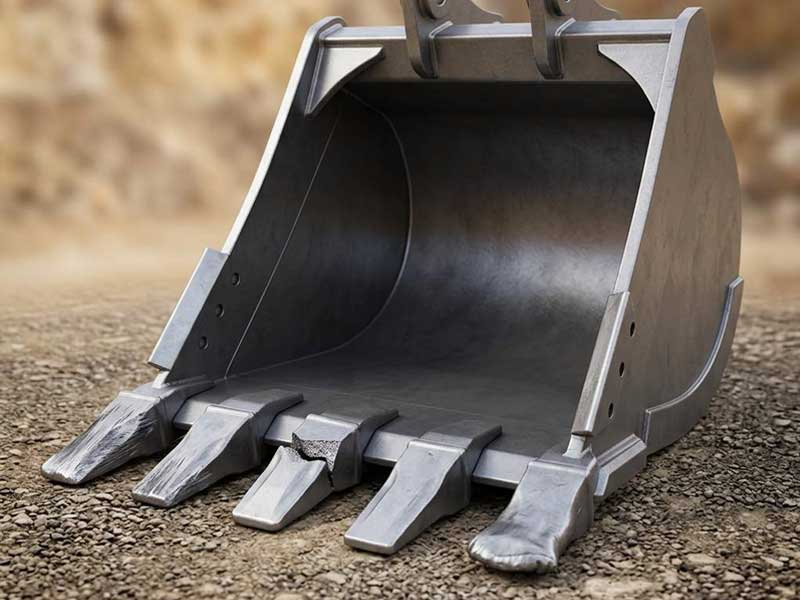
This is a catastrophic failure where a chunk of the tooth snaps off, or the entire tooth shears in half. It happens when the tooth hits an immovable object (like solid bedrock or large boulders) with too much force, exceeding the tensile strength of the steel.
The Pattern: A jagged, sudden break, often leaving the rear half of the tooth still pinned to the adapter.
The Fix: This usually means the tooth profile is too long or thin for the application.
1.3. Mushrooming (Peening)
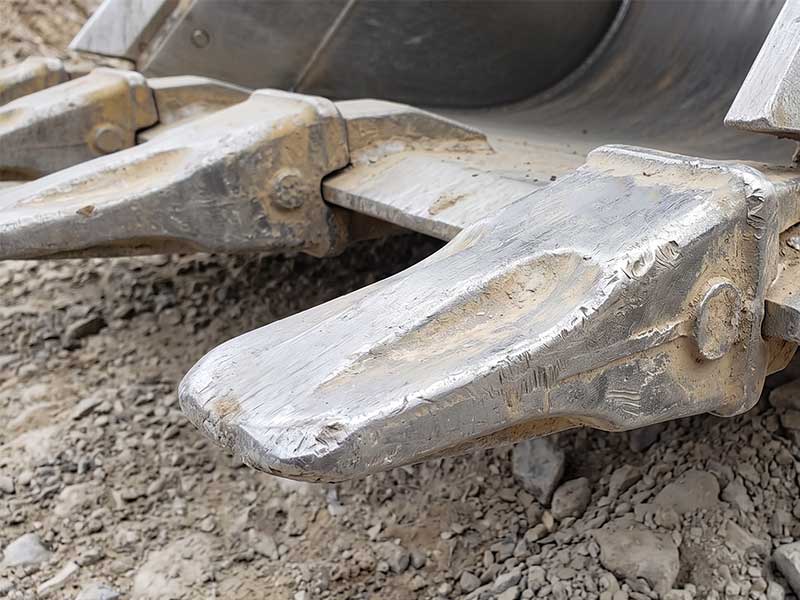
Mushrooming occurs when a tooth is repeatedly slammed into very hard, blunt surfaces without actually penetrating them. The impact force compresses the tip of the tooth, causing the steel to flatten and flare outwards like a mushroom cap.
The Pattern: The tip becomes blunt, wide, and deformed, drastically reducing digging efficiency and causing the machine to burn more fuel to force the bucket into the ground.
Key insight: A lost tooth is more than just a digging problem. If a broken or dislodged tooth ends up in a rock crusher downstream, it can cause hundreds of thousands of dollars in damage to the crushing equipment.
2. Prevention Strategies
The most effective way to prevent premature failure is matching the exact tooth profile to the ground conditions you are digging in.
Match the Profile to the Dirt:
If you are working in high-impact rock, a heavy-duty rock chisel or a robust penetration profile is necessary. Selecting a penetration-style tooth like the X156H is excellent for tightly packed ground, while a heavy-duty rock profile like the 240010 or U43792 provides the necessary bulk and strength for extreme impact, preventing premature breakage. Conversely, using those heavy rock teeth in highly abrasive sand will just result in them wearing down too quickly because they lack the specific wear-cap design of an abrasion tooth.
Maintain the Adapters:
As discussed, a worn adapter allows the tooth to wiggle. This movement acts like a hammer against the inside of the tooth, causing it to crack from the inside out. Ensuring your adapters (whether it's a 230SP, a 230SPL, or another model) are within spec is critical to tooth survival.
Correct Operator Technique:
Operators should avoid using the bucket teeth to pry or sweep large boulders side-to-side. Teeth are designed to handle force from the front (digging), not lateral twisting forces, which easily snap them.
3. How to properly measure an excavator adapter nose to see if it meets OEM wear specifications?
While "wiggling a new tooth" is a good field test, a precise measurement is required to determine if an adapter nose meets OEM wear specifications before welding on a new one. This ensures you don't waste time and money installing a new tooth on an adapter that will just break it.
You will need the specific OEM wear specification manual for your adapter series and the correct measuring tool—either a set of large calipers or a specialized OEM go/no-go wear gauge.
1. Clean the Adapter Thoroughly:Critical first step for accurate measurements.
Measurements must be taken on bare metal. Use a wire brush or a grinder with a wire wheel to remove all packed dirt, rock dust, rust, and old paint from the entire nose of the adapter, paying special attention to the stabilizing flats and the pin hole area.
2. Measure the Nose Length:
Using calipers or a rigid tape measure, measure from the tip of the adapter nose straight back to the base where it flares out (the shoulder). Compare this measurement to the OEM minimum length specification. If the nose has washed away and is shorter than the minimum, the adapter must be replaced.
3. Check the Stabilizing Flats (Thickness):
The top and bottom surfaces of the nose (the stabilizing flats) bear the brunt of the vertical digging forces. Measure the vertical thickness of the nose at the specific points indicated in your OEM manual (usually near the tip and again near the pin hole). If these flats are worn too thin, the tooth will rock up and down, shearing the pin.
4. Evaluate the Side Profile (Width):Use an OEM gauge if available.
Measure the width of the nose across the sides. Significant wear here allows the tooth to twist side-to-side during breakout. If using an OEM go/no-go gauge, slide it over the nose as instructed; if it slides past the wear limit mark, the adapter is rejected.
5. Inspect and Measure the Pin Hole:
Visually inspect the pin hole for elongation (wallowing). Use inside calipers or a specialized pin hole gauge to measure the diameter of the hole at multiple angles (top-to-bottom and side-to-side). If the hole is out of round beyond the OEM tolerance, the adapter will not hold a pin securely and must be replaced.
Important Note: Do not attempt to "build up" a worn adapter nose by welding layers of hard-facing wire onto it to restore the profile. This almost always fails in mining applications due to the intense stress and heat-affected zones created during the repair, leading to a snapped adapter in the cut.
Lihuacasting specializes in supplying a comprehensive range of bucket teeth for construction machinery. Our products are widely compatible with heavy equipment such as excavators, skid steer loaders, and backhoe loaders. We fully support OEM/ODM services and offer flexible small-batch customization to meet your specific requirements.
RELATED NEWS
- Disc Plow vs Disc Harrow for Primary & Secondary Tillage 2026-09-18
- What Factors Affect Plough Share Service Life? 2026-09-15
- 2026 Bucket Teeth Selection Guide for Soil Rock and Mining 2026-09-11
- OEM vs Aftermarket Bucket Teeth: Which Delivers Better Value for Your Fleet? 2026-09-10
- Agricultural Ground‑Engaging Tools: Aftermarket & Sourcing 2026-09-08
CATEGORIES
LATEST NEWS
CONTACT US
Contact: Susanna Sun
Phone: +86 13706842897
E-mail: sue-sunwin@vip.163.com ; sophie091983@gmail.com
Whatsapp:+86 13706842897
Add: 1588 Jiangnan Road Ningbo High-tech Industry zone