Blog
How to Choose the Right Subsoiler Shank for Your Implement?
If you are sourcing replacement or aftermarket parts for deep tillage, picking the right subsoiler shank directly impacts downtime, draft load and soil loosening performance. For B2B buyers, compatibility checks are the first and most critical step before comparing material, hardness and pricing. This guide breaks down fitment rules, cross-brand reference data and ordering workflows to help you match the subsoiler shank to your existing subsoiler, ripper or tractor attachment accurately.
A 2025 USDA field survey covering 312 commercial farms in North America and Europe noted that 41% of premature subsoiler shank failures came from poor fitment rather than material defects. Mismatched hole spacing, incorrect mounting thickness and incompatible connection styles create concentrated stress at bolt points, leading to bending or shear breakage within 100 working hours. Even premium heat-treated shanks cannot deliver expected service life if they are not engineered to match your implement frame and mounting geometry.
1. Brand Fitment Reference for Common Subsoiler Shank Models
| Equipment Brand | Popular Implement Series | Typical Mount Hole Spacing | Hole Diameter | Connection Type | Notes |
|---|---|---|---|---|---|
| John Deere | PS1001, PS10, TS3000 | 110–140 mm | 18 mm | Shear bolt | Cat 1 / Cat 2 hitch options; straight shank for light to medium depth |
| Case IH | Ecolo-Til 2500, Conser-Till 690 | 125–160 mm | 20 mm | Shear bolt / spring reset | Parabolic and MRD low-residue shank variants available |
| New Holland | ST series deep rippers | 130–155 mm | 20 mm | Shear bolt | Works with 30–36 inch row spacing configurations |
| Kverneland | CLI 300 / CLI 400 | 140–170 mm | 22 mm | Shear bolt | Curved shank, high release force for heavy compacted soil |
This table serves as a quick reference only. Lihuacasting maintains a full fitment cross-reference sheet covering hundreds of OEM part numbers, and we can share the complete compatible model chart upon request. We also support reverse engineering by sample, old shank or technical drawing for custom replacement, which is essential for older, discontinued implement models no longer supported by original manufacturers.
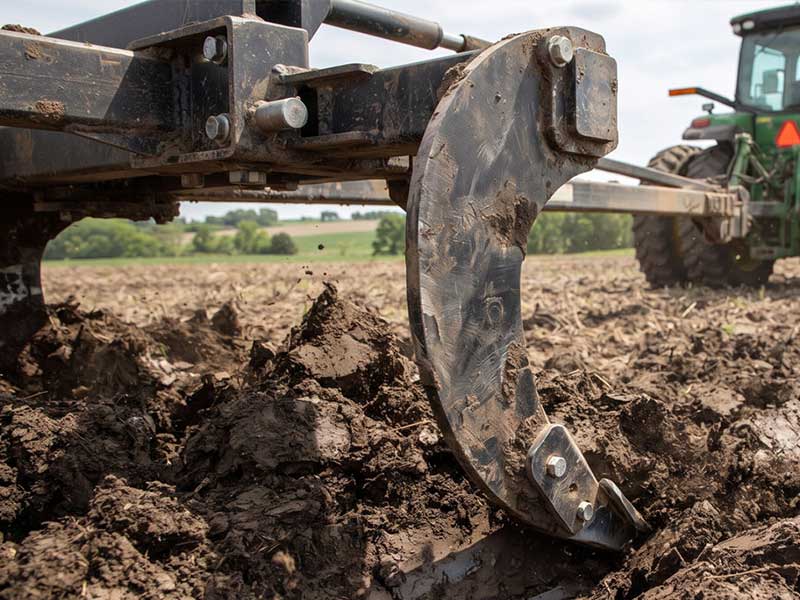
2. Core Compatibility & Fitment Checklist
Before confirming any subsoiler shank order, run through these high-priority checks:
1. Confirm whether the shank fits your existing subsoiler, deep ripper or tractor tillage attachment. A shank designed for a standalone ripper will rarely fit a frame-mounted subsoiler without modification.
2. Cross-reference the OEM part number against John Deere, Case IH, New Holland, Kverneland and other brand specifications. Many aftermarket suppliers use generic shapes that visually look similar but deviate on mounting geometry.
3. Measure mounting hole spacing, hole diameter, shank thickness, working width and bolt connection style. These five dimensions are non-negotiable for direct bolt-on replacement.
4. Confirm if you can supply a physical sample, old worn shank or 2D drawing. Our engineering team uses these files to lock dimensions and avoid field fitting.
5. Request the brand-model compatibility table to avoid repeated dimension checks for repeat orders.
Many purchaser ask whether visual similarity is enough. The answer is no. Two subsoiler shanks can look identical in photos yet differ by 5–8 mm in hole pitch, which is enough to prevent proper installation or create dangerous stress points.
3. Dimension Tolerance Standard for Aftermarket Subsoiler Shank Replacement
| Parameter | OEM Standard Tolerance | Manufacturer Machining Tolerance | Generic Aftermarket Tolerance | Field Impact |
|---|---|---|---|---|
| Mount hole center distance | ±1.0 mm | ±0.5 mm | ±2.0 mm | Out-of-tolerance parts may require re-drilling on farm |
| Hole diameter | +0.0 / +0.8 mm | +0.0 / +0.6 mm | +0.0 / +1.5 mm | Loose holes accelerate bolt wear and vibration fatigue |
| Shank plate thickness | ±0.4 mm | ±0.3 mm | ±1.0 mm | Thinner shanks bend under high draft load |
| Working depth profile | ±3 mm | ±2 mm | ±6 mm | Affects uniform soil breaking and residue flow |
Lihuacasting applies CNC machining and heat treatment control to lock these tolerances. Our subsoiler shank is made of boron steel or hardened alloy steel with controlled HRC 48–52 hardness, balancing impact toughness and abrasion resistance for rocky and heavy clay fields. For buyers prioritizing no-till farming, we offer parabolic and low-disturbance profiles that match original OEM draft characteristics.
4. Match Shank Design to Your Soil and Tractor Setup
Compatibility is not only about mounting. The subsoiler shank shape and thickness must match your tractor power and working depth target. General industry guidance recommends roughly 50–60 PTO horsepower per shank for standard deep tillage. A curved bentleg shank reduces draft force and surface soil disturbance, while a straight heavy-duty shank delivers stronger penetration for dense plow pans.
Shank Style Selection Guide by Tillage Practice
| Shank Type | Best Tillage System | Typical Working Depth | Draft Requirement | Residue Disturbance |
|---|---|---|---|---|
| Straight heavy-duty subsoiler shank | Conventional deep ripping | 35–55 cm | High | Moderate |
| Parabolic bentleg shank | Conservation tillage, no-till | 30–45 cm | Medium | Low |
| Minimum residue disturbance (MRD) shank | Strip-till, cover crop systems | 28–40 cm | Medium-low | Very low |
If you operate a mixed rotation of corn, soybeans or wheat, MRD or parabolic shank is often preferred to keep residue cover on the surface and reduce moisture loss. For heavy clay or compacted construction-reclaimed fields, the straight reinforced subsoiler shank with replaceable points is the safer selection.
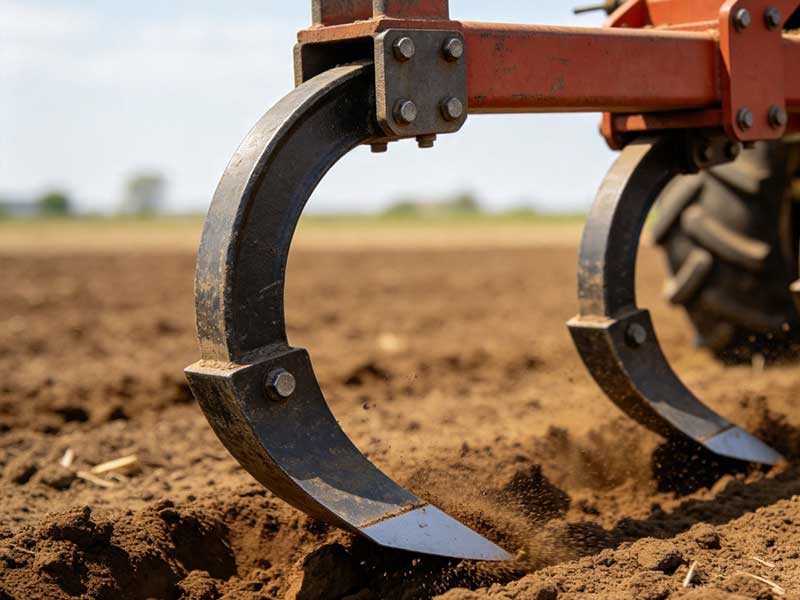
5. How to Custom Subsoiler Shanks
Our custom process is built around fitment certainty. You can send:
- OEM part number and implement model
- Photos with dimension markings of the old subsoiler shank
- Physical sample shipped to our casting and machining workshop
- PDF or DWG technical drawings for custom casting or CNC fabrication
We will return a dimension verification sheet and cross-check against our fitment database before production. All custom subsoiler shank batches go through hardness inspection and dimensional sampling before shipment. We also prepare fitment tables for distributors who maintain inventory for multiple farm equipment brands.
FAQ
Q1: Can I replace a subsoiler shank from one brand with another brand’s aftermarket unit?
A: Only if mounting hole spacing, hole diameter, plate thickness and connection method are fully matched. Shape similarity alone is not sufficient.
Q2: Do you supply a compatibility list for all subsoiler models?
A: Yes. We maintain a continuously updated fitment chart and can send it after you share your target implement series.
Q3: Can you produce a subsoiler shank from my old worn part or drawing?
A: Absolutely. Our team handles reverse engineering, casting, heat treatment and CNC machining to match your original geometry.
RELATED NEWS
- Disc Harrow Guide: Adjustment, Maintenance, Troubleshooting & Working Width Sele 2026-10-28
- How to Overcome Tool Wear Challenges When Machining High-Hardness Iron Castings? 2026-10-23
- Low-Temperature Charpy Impact Testing for Off-Road Trailer Castings 2026-10-20
- Common Casting Defects in Trailer Towing Rings and How to Prevent Them 2026-10-15
- Ductile Iron vs. Carbon Steel Engineering Guide for Heavy-Duty Agricultural Trai 2026-10-13
CATEGORIES
LATEST NEWS
CONTACT US
Contact: Susanna Sun
Phone: +86 13706842897
E-mail: sue-sunwin@vip.163.com ; sophie091983@gmail.com
Whatsapp:+86 13706842897
Add: 1588 Jiangnan Road Ningbo High-tech Industry zone