Blog
Common Casting Defects in Trailer Towing Rings and How to Prevent Them
Trailer towing rings are critical load-bearing casting components for heavy trailers, agricultural and construction machinery, where hidden casting defects such as porosity and shrinkage directly threaten towing safety and long-term fatigue life. Even minor internal voids in trailer towing rings can expand under cyclic pulling loads, triggering sudden fracture during off-road, mining or heavy haulage operations.
According to 2025 foundry industry statistics, porosity and shrinkage account for roughly 61% of all rejected heavy-duty trailer casting parts; many B-side suppliers deliver components with internal defects undetected by basic visual inspection, resulting in field failures, warranty claims and costly machine downtime for trailer OEMs.
1. Porosity (Gas Porosity) in Trailer Towing Rings: Causes & Hazards
Gas porosity appears as smooth, rounded internal voids trapped inside cast steel trailer towing rings. Unlike shrinkage, these cavities originate from gas entrapment rather than metal volume contraction.
Root Causes:
1. High moisture content in sand mold, core or return scrap releases hydrogen/CO gas after contact with high-temperature molten steel.
2. Insufficient mold venting or blocked vent channels during mold design; turbulent gating flow rolls air into the casting cavity.
3. Poor ladle preheating, contaminated refractory coating, and dissolved gas inside molten steel before pouring.
4. Improper pouring speed: overly fast filling creates air entrapment, while slow pouring causes premature crusting and gas locking.
Porosity weakens the effective cross-section of trailer towing rings. Even low-volume gas pores become stress concentration origins under repeated dynamic towing force, shortening fatigue life. Surface-connected porosity also accelerates corrosion during outdoor working conditions.
2. Shrinkage & Shrinkage Porosity in Trailer Towing Rings: Causes & Hazards
Shrinkage defects include macro shrinkage cavities and dispersed micro shrinkage porosity, usually found at thick sections, ring hub and cross-section junctions of trailer towing rings. During solidification, molten steel loses volume; if no extra liquid metal can feed the hot spot, jagged dendritic voids form inside the casting.
Root Causes:
1. Unreasonable riser design: riser modulus fails to meet Chvorinov’s rule, so risers solidify earlier than the hot spot of trailer towing rings and lose feeding capacity.
2. Non-directional solidification: thick and thin sections cool at inconsistent rates, forming isolated hot zones without feeding channels.
3. Excessive pouring superheat increases total solidification shrinkage volume and expands the mushy zone of cast steel.
4. Improper chills layout; hot spots remain uncooled, leaving micro shrinkage scattered in high-stress areas of towing rings.
Shrinkage porosity is more dangerous than gas porosity for trailer towing rings, as interconnected micro voids rapidly propagate into fatigue cracks under alternating towing load.
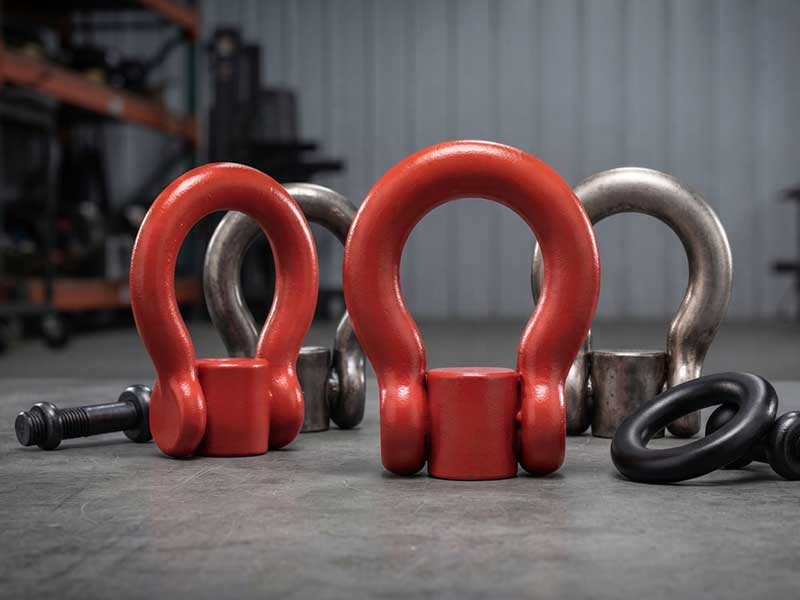
Table 1: Distinction Between Porosity and Shrinkage Defects for Trailer Towing Rings
| Defect Item | Morphology Feature | Typical Location | Primary Root Cause | Mechanical Impact |
|---|---|---|---|---|
| Gas Porosity | Smooth, spherical, isolated voids | Surface/subsurface of ring body, near gates | Mold moisture, poor venting, gas dissolved in melt | Reduced fatigue resistance, corrosion penetration risk |
| Shrinkage Porosity | Irregular jagged, dendritic micro void clusters | Thick hub, section junction of towing ring | Insufficient feeding, poor directional solidification | High risk of crack initiation under cyclic towing load |
| Macro Shrinkage Cavity | Large continuous rough cavity | Central hot spot of thick wall | Undersized riser, wrong riser placement | Immediate failure under rated towing load |
3. Industry Benchmark Data: Defect Rejection Rate of Trailer Towing Ring Castings
Global foundry industry benchmark data shows conventional sand casting of trailer towing rings has an average total scrap rate of 4.8–7.2%, among which porosity and shrinkage contribute over 60% of scrap parts. Advanced OEM casting foundries with simulation-driven process control can cut the combined porosity & shrinkage scrap rate down to below 1.2%.
Table 2: Scrap Rate Benchmark for Trailer Towing Ring OEM Casting
| Production Level | Combined Porosity & Shrinkage Scrap Rate | Inspection Method | Applicable Towing Load Grade |
|---|---|---|---|
| Conventional foundry (no casting simulation) | 4.1% ~ 6.3% | Visual + sample destructive test | Light-duty trailer towing rings (<10 ton) |
| Standard controlled foundry | 1.8% ~3.0% | Visual + spot X-ray NDT | Medium-duty trailer towing rings (10–35 ton) |
| High-end OEM foundry | ≤1.2% | Visual + 100% first article X-ray + SPC monitoring | Heavy-duty trailer towing rings (>35 ton, construction/mining) |
4. Factory Prevention & Full Quality Control Workflow for Porosity and Shrinkage
Defect prevention for trailer towing rings must run through design simulation, raw material melting, mold making, pouring, post-processing and non-destructive testing, rather than only inspecting finished castings. We adopt a 6-stage closed-loop (quality control) workflow at Lihuacasting
Stage 1: Pre-production casting simulation & riser/chill optimization
We run MAGMAsoft solidification simulation on every new trailer towing ring drawing before tooling manufacture. The simulation predicts hot spot locations, optimizes riser modulus (M_riser ≥1.2 × M_casting), designs external chills at thick hubs, and layouts venting channels to eliminate gas trapping. This step prevents 70% of potential shrinkage and porosity defects before mass production.
Stage 2: Raw material and melting process control for gas reduction
All scrap returns and alloy ingots are baked to remove moisture; ladles and refractory linings are fully preheated. We control sand moisture below 3.0% and sand permeability within specification. Degassing treatment is performed on molten steel to lower dissolved hydrogen content, eliminating the main source of gas porosity.
Stage 3: Gating & pouring parameter locked process
We set controlled pouring temperature and pouring speed to avoid turbulence. Bottom filling gating system is preferred for trailer towing rings to reduce air rolling. All critical pouring parameters are tracked via SPC real-time monitoring.
Stage 4: Cooling control & shakeout timing management
Shakeout time is strictly scheduled to guarantee directional solidification; chills are placed at hot spots to accelerate local cooling, ensuring molten metal continuously feeds shrinkage volume before solidification completes.
Stage 5: Post-casting cleaning and heat treatment
Heat treatment relieves casting stress and improves material compactness. Surface grinding removes surface defects, and all riser cutting is operated following defined procedures to avoid secondary cracking.
Stage 6: Multi-level inspection and non-destructive testing (NDT)
First article inspection: X-ray radiography to check internal porosity/shrinkage before batch release. Mass production adopts sampling X-ray + magnetic particle inspection, plus load proof test for critical trailer towing rings. Non-conforming parts are isolated for metallurgical root cause review and process correction.
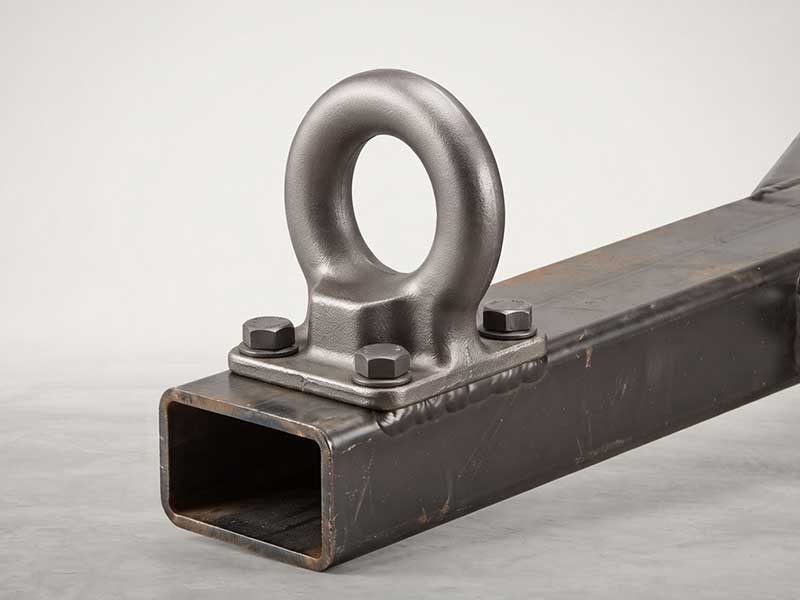
Table 3: SPC Control Parameters to Prevent Porosity & Shrinkage of Trailer Towing Rings
| Control Parameter | Spec Range | Target Control Value | Defect Risk if out of spec |
|---|---|---|---|
| Molding sand moisture | ≤3.0% | 2.2–2.8% | Higher moisture = increased gas porosity |
| Pouring superheat | 50–80℃ | 60℃ | Too high → severe shrinkage; too low → cold shut & trapped gas |
| Riser modulus ratio | ≥1.2 | 1.2~1.4 | Lower ratio → shrinkage porosity at towing ring hub |
| Molten steel hydrogen content | ≤2.5 ppm | ≤2.0 ppm | Excess hydrogen → scattered gas porosity |
| Shakeout holding time | ≥4 hours | 4–6 hours | Early shakeout → incomplete feeding, micro shrinkage |
5. Practical Tips for Trailer OEM Buyers to Avoid Defective Towing Ring Castings
When sourcing OEM trailer towing rings, buyers should not only check material certificates and surface appearance. Request foundry suppliers to provide casting simulation reports, X-ray NDT records and SPC parameter logs for first articles. Many low-price castings pass visual inspection but contain hidden micro shrinkage inside the towing ring hub, which will only fail under dynamic load tests.
Working with a professional construction machinery casting manufacturer means you get full traceability for each batch of trailer towing rings, from melting logs to final load testing reports. Our engineering team can also customize casting design, adjust alloy grades and optimize gating systems for your special trailer towing ring drawings, to minimize casting defects and extend component service life.
If you need custom trailer towing rings, metallurgical audits or casting defect consultation, contact Lihuacasting’s engineering team for technical support and quotation.
RELATED NEWS
- Ductile Iron vs. Carbon Steel Engineering Guide for Heavy-Duty Agricultural Trai 2026-10-13
- Heavy Duty Disc Harrow: How to Choose the Right Model? 2026-10-09
- How to choose the right lawn mower blades? 2026-09-23
- How to Choose Right Industrial Steel Self-Dumping Forklift Hopper? 2026-09-21
- Disc Plow vs Disc Harrow for Primary & Secondary Tillage 2026-09-18
CATEGORIES
LATEST NEWS
CONTACT US
Contact: Susanna Sun
Phone: +86 13706842897
E-mail: sue-sunwin@vip.163.com ; sophie091983@gmail.com
Whatsapp:+86 13706842897
Add: 1588 Jiangnan Road Ningbo High-tech Industry zone