Blog
Low-Temperature Charpy Impact Testing for Off-Road Trailer Castings
1. Impact Resistance Analysis of Cast Components for Off-Road Engineering Trailers
Off-road engineering trailers operate in demanding environments where cast components may be exposed to impact loads, uneven terrain, vibration, and sub-zero temperatures. For trailer manufacturers and OEM buyers, selecting castings based only on tensile strength or hardness may not be sufficient. Impact toughness at the intended service temperature is another important consideration.
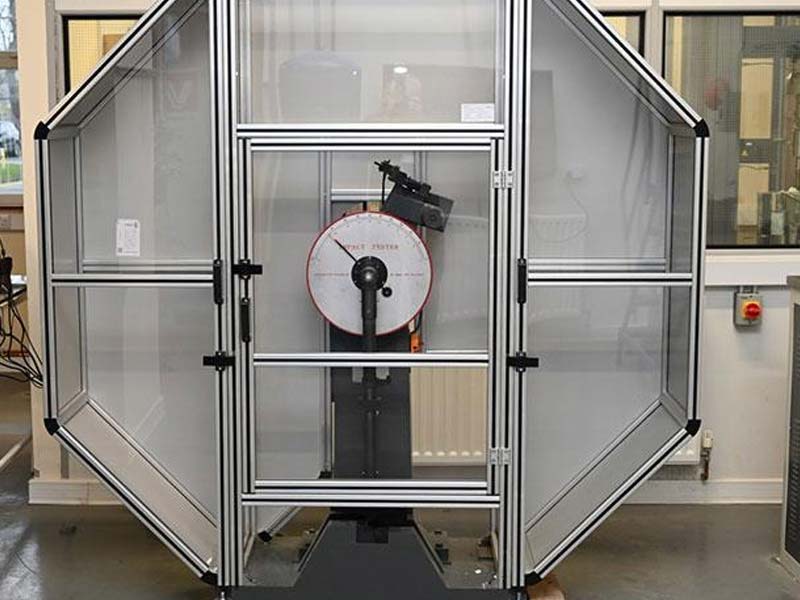
The Charpy impact test provides a standardized method for evaluating the energy absorbed by a notched specimen during fracture. When conducted at low temperatures, it helps engineers assess how a casting material responds to sudden loading under cold-weather conditions.
In this article, we examine the role of low-temperature Charpy impact testing in casting quality evaluation, explain how to interpret impact test data, and outline practical considerations for sourcing cast components for off-road engineering trailers.
2. Why Low-Temperature Impact Resistance Matters
2.1 Demanding Operating Conditions for Off-Road Trailers
Engineering trailers used in construction, mining, forestry, agricultural operations, and remote infrastructure projects may encounter a combination of mechanical and environmental stresses.
Typical operating conditions include:
Repeated impact loads caused by rough roads, rocks, potholes, and uneven ground.
Low ambient temperatures that can reduce the impact toughness of certain metallic materials.
Stress concentrations around holes, ribs, fillets, mounting points, and changes in section thickness.
Repeated loading and vibration during transportation.
Variable payloads and dynamic forces transmitted through the trailer frame and suspension system.
Under these conditions, the performance of cast components depends on more than static strength. Material toughness, casting soundness, heat treatment, component geometry, and manufacturing consistency can all affect service reliability.
2.2 Why Temperature Matters
Some steels and other metallic materials exhibit a transition from relatively ductile fracture behavior to more brittle fracture behavior as temperature decreases. The extent and temperature range of this transition depend on material composition, microstructure, heat treatment, specimen geometry, and other factors.
A material that demonstrates acceptable impact performance at room temperature may not deliver the same absorbed energy at a substantially lower temperature.
For this reason, low-temperature impact testing can be important when trailer castings are intended for winter operation, cold-region transportation, or outdoor engineering work.
The required test temperature should be established from the expected service environment, applicable material specifications, design requirements, and the consequences of component failure.
3. Key Test Parameters of the Charpy Impact Test
Test temperature: Typical qualification temperatures may include 0°C, −20°C, −40°C, or lower temperatures, depending on the application and specification.
Absorbed impact energy: Expressed in joules. Higher absorbed energy generally indicates greater resistance to fracture in that specific test configuration, but does not by itself establish the full fracture performance of a finished component.
Specimen dimensions: Standard full-size Charpy V-notch specimens are commonly 10 × 10 × 55 mm. Subsize specimens may be required when component dimensions or material availability prevent full-size sampling. Results from different specimen sizes should not be compared without considering the applicable standard and acceptance criteria.
Notch geometry: The notch shape and dimensions influence the stress concentration and must conform to the selected test standard.
Specimen temperature and conditioning: The specimen must reach the specified test temperature, and the transfer and testing procedure must control temperature changes in accordance with the relevant standard.
Low-Temperature Charpy Impact Test Data for Cast Components
Example Test Conditions
For a meaningful comparison, the test temperature and specimen configuration should be documented together with the measured results.
An example test plan for a cast steel component intended for cold-weather service might include the following parameters.
| Parameter | Example specification |
|---|---|
| Component application | Off-road engineering trailer casting |
| Material | Specified cast steel grade, to be confirmed |
| Test method | Charpy V-notch impact test |
| Reference standard | ASTM E23 or ISO 148-1, as contractually agreed |
| Test temperatures | −20°C, −40°C, and −60°C |
| Specimen size | Standard full-size specimen, if feasible |
| Specimens per temperature | Three, as an illustrative test plan |
| Reported values | Individual absorbed energy, average, and specified minimum |
| Acceptance criteria | Approved drawing, material specification, or purchase order |
These conditions are illustrative. The actual testing plan must be selected according to the material grade, applicable specification, component design, and customer's requirements.
4. Material Selection for Off-Road Engineering Trailer Castings
4.1 Cast Steel
Cast steel may be appropriate for trailer components that require a combination of strength, toughness, and complex geometry. However, its low-temperature impact performance depends on the specified grade, chemical composition, heat treatment, microstructure, and manufacturing quality.
For cold-weather applications, the purchasing specification should identify the required test temperature and impact acceptance criteria rather than relying on a generic description such as high-strength cast steel.
4.2 Ductile Iron
Ductile iron can offer useful strength, castability, and wear-related performance in selected applications. Its impact behavior, however, differs from that of steel and depends on the grade, matrix structure, nodularity, section thickness, and temperature.
Low-temperature suitability must be established using the relevant material specification and application-specific evidence. A Charpy requirement developed for a particular cast steel grade should not automatically be applied to ductile iron without technical justification.
4.3 Match Material Properties to Component Function
Different trailer components have different loading conditions and failure consequences. Potential applications include:
Suspension brackets and mounting supports.
Coupling-related cast components.
Structural connectors and load-bearing brackets.
Axle or running-gear-related cast parts, where the design permits.
Custom castings used in heavy-duty trailer assemblies.
These examples are not interchangeable in terms of design requirements. Each component should be evaluated against its actual loading, geometry, service temperature, fatigue exposure, and applicable safety requirements.
A suitable material selection process should consider impact toughness alongside yield or tensile properties, fatigue performance, wear resistance, corrosion protection, manufacturability, and total component cost.
5. Quality Control: From Casting Production to Impact Testing
5.1 Control the Material and Heat-Treatment Process
Reliable impact performance begins with consistent manufacturing. Relevant controls may include chemical composition verification, melt and heat traceability, casting process control, heat-treatment records, and inspection for relevant casting discontinuities.
Heat treatment can significantly influence the microstructure and toughness of cast steel. Consequently, test specimens should represent the material condition specified for the finished casting.
5.2 Ensure Representative Sampling
The sampling location should be defined in the technical specification or approved inspection plan. Where relevant, the plan should address whether specimens are taken from a representative casting, a separately cast test block, or material attached to the casting.
These approaches are not necessarily equivalent. Cooling rate, section thickness, segregation, and local microstructure may vary between a test block and the finished component.
Where the risk warrants it, component-representative testing and additional inspection may be necessary.
5.3 Establish Clear Acceptance Criteria
Before production, buyers and suppliers should agree on:
The required material grade and product specification.
The impact test standard and specimen type.
The test temperature or temperatures.
The number of specimens and acceptance rules.
Sampling location and heat-treatment condition.
Documentation, traceability, and retest procedures.
This agreement helps prevent disputes caused by unclear testing requirements or inconsistent interpretations of impact test results.
6. OEM and Custom Casting Solutions for Off-Road Trailers
For OEM and ODM projects, impact testing should be considered during the design and sourcing stages rather than introduced only after mass production begins.
A practical qualification process may include the following steps.
Step 1: Review drawings and application requirements
Provide component drawings, material requirements, estimated loading conditions, operating temperature range, and relevant industry or customer specifications.
Step 2: Confirm material and manufacturing feasibility
Review the proposed casting material, geometry, section thickness, casting process, heat-treatment route, and any areas requiring additional inspection.
Step 3: Define the inspection and test plan
Agree on Charpy test temperatures, specimen configuration, sample quantity, acceptance criteria, traceability, and required documentation.
Step 4: Validate samples before production
Evaluate representative samples against the approved requirements. Where necessary, supplement impact testing with dimensional checks, mechanical testing, and suitable nondestructive examinations.
Step 5: Maintain batch consistency
For ongoing production, establish appropriate lot traceability, process controls, and inspection frequency according to the product's risk level and contractual requirements.
A well-defined qualification process helps purchasing teams assess suppliers on measurable technical requirements rather than on price alone.
7. FAQ - Frequently Asked Questions
Q1: What is a good Charpy impact value for trailer castings at low temperatures?
There is no single impact energy value that is suitable for all trailer castings. The required value depends on the material grade, test temperature, specimen dimensions, applicable specification, component design, and consequences of failure. Acceptance limits should be agreed upon before testing.
Q2: Why is Charpy testing performed at −40°C?
A −40°C test may be relevant to equipment designed for severe cold-weather service. However, it is not a universal requirement for engineering trailers. The specified temperature should reflect the expected service environment and the governing design or purchasing requirements.
Q3: Does a higher Charpy value guarantee a safer casting?
No. Charpy absorbed energy is one indicator of material impact behavior under a standardized test. It does not independently establish structural integrity, fatigue life, defect tolerance, or resistance to every possible service impact.
Q4: Can Charpy results be compared between different casting suppliers?
Yes, provided the comparisons use equivalent materials or clearly defined material conditions, test temperatures, specimen dimensions, test methods, sampling practices, and acceptance criteria. Differences in these parameters can make direct comparisons misleading.
Q5: What information should buyers request from a casting supplier?
Buyers should request the material specification, traceable test reports, individual Charpy results, test temperature, specimen details, heat-treatment records, and agreed acceptance criteria. Additional inspection records may be required depending on the component's function and risk.
If you are sourcing custom cast steel or ductile iron components for off-road engineering trailers, prepare your drawings, material specifications, operating temperature range, and inspection requirements for a technical review.
Contact our engineering team to discuss custom casting feasibility, low-temperature impact testing requirements, and quality documentation for your next OEM project.
RELATED NEWS
- Common Casting Defects in Trailer Towing Rings and How to Prevent Them 2026-10-15
- Ductile Iron vs. Carbon Steel Engineering Guide for Heavy-Duty Agricultural Trai 2026-10-13
- Heavy Duty Disc Harrow: How to Choose the Right Model? 2026-10-09
- How to choose the right lawn mower blades? 2026-09-23
- How to Choose Right Industrial Steel Self-Dumping Forklift Hopper? 2026-09-21
CATEGORIES
LATEST NEWS
CONTACT US
Contact: Susanna Sun
Phone: +86 13706842897
E-mail: sue-sunwin@vip.163.com ; sophie091983@gmail.com
Whatsapp:+86 13706842897
Add: 1588 Jiangnan Road Ningbo High-tech Industry zone