Blog
Shot Blasting : How to Assess Casting Factory Quality for Construction & Farm Parts
Severe working conditions expose excavator bucket teeth, suspension control arms, agricultural plowshares and other heavy-duty cast components to constant friction, impact and alternating load. Many buyers frequently encounter two critical product failures: premature coating peeling and early fatigue fracture of spare parts. Few purchasers realize that shot blasting acts as an invisible protective barrier in the full casting process, directly governing anti-corrosion performance and overall service life of machinery spare parts.
This guide targets procurement specialists sourcing wear-resistant casting parts from foundry suppliers and manufacturers. It breaks down the core logic of shot blasting workflows, reveals common industry pitfalls, and delivers actionable inspection standards to assess factory production capacity. By mastering shot blasting evaluation metrics, buyers can distinguish qualified OEM casting partners from low-end workshops and stabilize long-term supply chains for construction and farming machinery components.
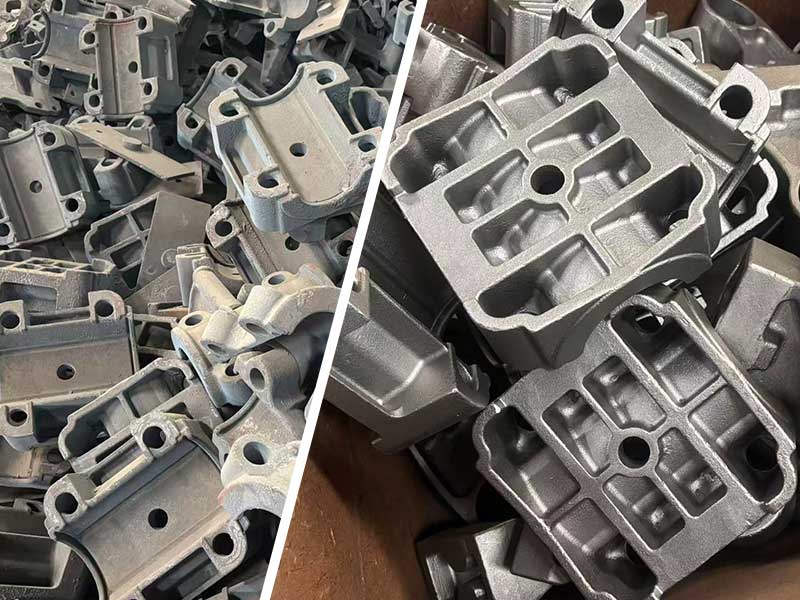
1. Pre-Shot Blasting Working Procedures in Standard Casting Process
Shot blasting is a post-treatment procedure for castings, and its previous upstream step varies based on different production routes. Three mainstream pre-processes widely adopted by casting factories are sorted as below, alongside their processing purposes and corresponding typical workpieces:
Table 1 : Three Common Preceding Processes Before Shot Blasting
| Pre-Shot Blasting Procedure | Applicable Workpieces | Core Processing Purpose | Post-State Before Shot Blasting |
| Heat Treatment (Quenching & Tempering) | Excavator bucket teeth, chassis suspension castings, heavy wear-resistant parts | Boost tensile strength and wear resistance of castings via thermal treatment | Thick oxide scale forms on casting surface after high-temperature heating |
| Cutting & Rough Grinding | General non-heat-treated small casting accessories | Remove gating systems, riser residues and sharp burrs | Minor grinding scratches and local burrs remain on casting surface |
| Knockout & Shell Removal (Investment Casting) | Precision investment cast parts, complex agricultural machinery fittings | Strip refractory ceramic shell after molten metal solidification | Residual shell sand sticks to casting gaps and inner holes |
A complete standardized precision casting production flow for heavy machinery parts is listed as follows:
Molten Metal Pouring & Cooling → Knockout Shell Removal → Casting Cutting & Separation → Gate Rough Grinding → Heat Treatment → Shot Blasting → NDT Inspection / Anti-Rust Treatment / CNC Machining
If castings still have dark spots, residual sand or insufficient surface smoothness after shot blasting, procurement teams can trace back upstream defects: excessive oxide scale caused by abnormal furnace atmosphere during heat treatment, or incomplete shell knockout leading to stubborn refractory residues on component surfaces.
2. Three Core Functional Values of Shot Blasting for Heavy Machinery Castings
Most suppliers and purchasers mistakenly define shot blasting as a simple rust removal operation. In the full casting process, professional shot blasting delivers three irreplaceable technical values for OEM machinery parts:
2.1. Precise Surface Preparation & Roughness Control
Shot blasting thoroughly clears casting adhered sand, forging rust and surface oxide scale. It creates uniform surface anchor patterns with controllable roughness (Ra & Rz values), laying a qualified base for subsequent paint or powder coating spraying. This fundamentally solves coating detachment issues of outdoor construction and farming equipment under long-term wind, rain and ultraviolet exposure.
2.2. Fatigue Resistance Reinforcement via Compressive Residual Stress
High-speed steel shot impacts casting surfaces and forms a stable compressive residual stress layer. For trailer axles, excavator arm connecting castings and other components bearing frequent alternating loads, this shot peening effect restrains microcrack expansion and greatly extends the fatigue service life of finished machinery parts.
2.3. Hidden Casting Defect Screening Tool
Original hidden casting flaws including porosity, shrinkage porosity and cold shuts are fully exposed after shot blasting treatment. Reliable manufacturers will complete full surface inspection after shot blasting to reject defective castings before delivery, lowering the after-sales failure risk for buyers.
3. Main Industry Challenges Facing Shot Blasting Workshops
The huge gap in product quality and quotation between different casting factories largely stems from unbalanced shot blasting processing standards. Three major bottlenecks restrict stable shot blasting quality across the industry:
3.1. Strict Environmental Compliance Restrictions
Shot blasting generates massive dust and continuous noise, which are key supervision targets of environmental protection authorities. Many small-scale suppliers and under-equipped manufacturers lack complete dust removal systems and formal EIA certificates. Their shot blasting workshops face random production suspension risks, bringing huge instability to buyers’ global supply chains.
3.2. Rising Consumable & Equipment Maintenance Costs
High-quality casting steel shot (cast steel shot, wire cut shot) has volatile market prices. To cut production costs, numerous unqualified factories reuse crushed waste steel grit with low cleaning efficiency, resulting in dark, uneven casting surfaces. Besides, shot blasting machine impellers and liners wear rapidly; factories with delayed equipment maintenance will produce parts with incomplete shot blasting coverage and unstable batch quality.
3.3. Inconsistent Quality from Semi-Automated Production
Traditional hook-type and crawler shot blasting machines rely heavily on workers’ experience to control blasting duration. Even within one production batch, inner and outer surfaces of castings may receive uneven shot blasting treatment. Such inconsistency fails to meet standardized quality requirements of overseas high-end OEM machinery purchasers.
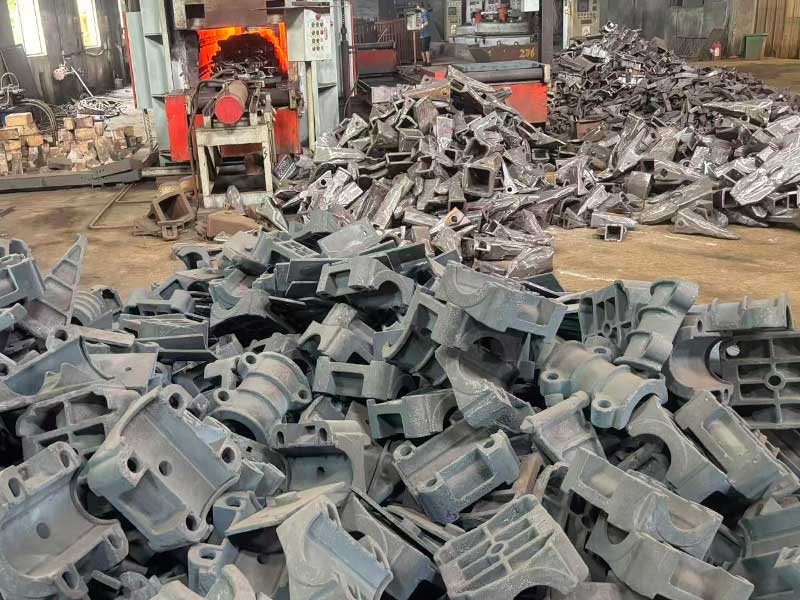
4. Practical Sourcing Standards: Inspect Supplier Shot Blasting Capacity
This section provides implementable inspection checklists for buyers visiting casting manufacturers and factories. Four dimensions help comprehensively judge a supplier’s shot blasting technical strength:
Table 2 : Four Key Inspection Dimensions for Factory Shot Blasting Capacity
| Inspection Dimension | Core On-Site Verification Items | Red Flags of Unqualified Suppliers |
| Production Equipment Configuration | Matching shot blasting models for workpieces; variable frequency control system to adjust blasting intensity; through-type machines for long trailer beam castings | Single crawler shot blaster for all parts; no adjustable blasting power; frequent workpiece collision damage |
| Steel Shot & Circulation System | Regular new steel shot replenishment; complete shot-sand separation recycling system | Long-term use of waste mixed grit; no separation device, lots of dust mixed in blasting medium |
| Quantitative Quality Control | Surface roughness tester for Ra/Rz testing; Almen test strips for shot peening strength recording; batch shot blasting coverage records | Only visual inspection without testing tools; no standardized quality test documents |
| Environmental Compliance | Complete EIA certification; fully enclosed dust collection workshop; zero dust overflow outside the workshop | Open shot blasting operation; incomplete dust removal equipment; missing environmental qualification documents |
4.1 Hardware Equipment Matching Check
Buyers must confirm whether the factory’s shot blasting equipment matches their own casting specifications. Delicate precision castings post CNC machining cannot use crawler shot blasters to avoid collision scratches, while long heavy trailer structural castings require pass-through continuous shot blasting lines. Advanced manufacturers install variable frequency drive systems to flexibly adjust shot blasting speed and impact force for different part materials.
4.2 Steel Shot Raw Material Audit
Low-cost waste steel grit leads to incomplete cleaning and dim casting appearance. Reliable casting suppliers equip independent shot-sand separation systems to filter broken grit and dust, and replenish brand-new steel shot on fixed schedules to guarantee consistent blasting effects for every casting batch.
4.3 Quantifiable Quality Inspection Verification
Visual judgment of “bright or dark surfaces” cannot represent qualified shot blasting results. Professional manufacturers record objective test data with roughness gauges and Almen test strips, which buyers can request as batch quality certification documents before placing bulk OEM casting orders.
4.4 Environmental Compliance Confirmation
Valid environmental assessment approval is the non-negotiable bottom line for supplier cooperation. Clean, dust-free shot blasting workshops reflect standardized factory management, while messy, dust-leaking workshops indicate hidden production shutdown risks that may delay your machinery parts delivery.
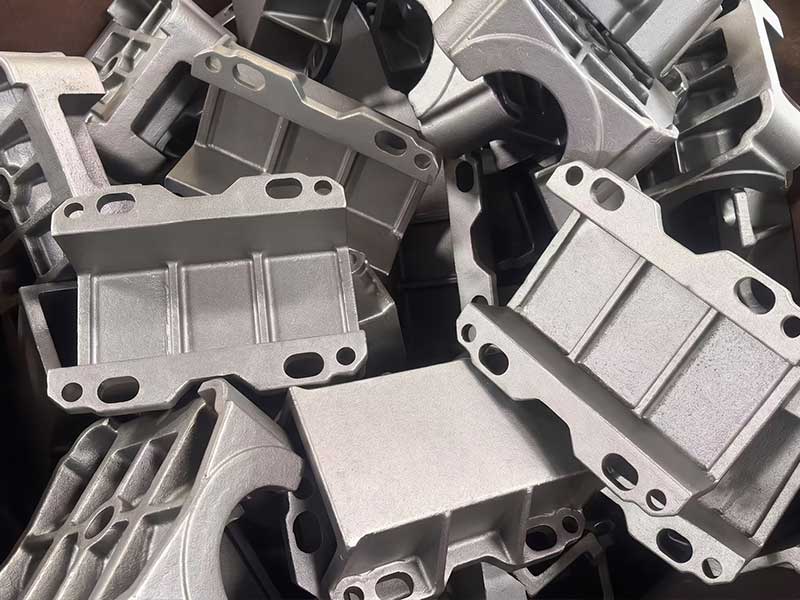
5. Searching for stable, high-standard OEM casting partners
Shot blasting is never a low-end rough processing link in the complete casting process, but a core procedure determining both surface appearance and internal fatigue resistance of excavator, agricultural and trailer casting components. For global procurement managers, a 15-minute inspection of the shot blasting workshop during factory audits can effectively identify unqualified manufacturers and optimize your casting supplier portfolio.
When searching for stable, high-standard OEM casting partners with mature shot blasting processing capacity, turn to LihuaCasting.
LihuaCasting is a premier provider of top-tier OEM casting services with over 30 years experience, which specializes in the manufacturing of high-quality precision cast components and machinery parts.Our comprehensive range of services encompasses earth moving Wear Parts, Trailer Parts, railway parts, Truck Parts, Farming Parts, excavator quick adapters, quick coupler castings, and Customized Castings.
Every casting produced at Lihua Casting undergoes standardized shot blasting procedures with full-process quality testing. We deploy automated enclosed shot blasting production lines, complete dust removal environmental equipment and professional roughness & Almen testing instruments. Our stable shot blasting technology eliminates coating peeling and early fatigue failures, delivering long-service-life casting spare parts to global machinery OEM purchasers across construction, agriculture, railway and truck industries.
RELATED NEWS
- How to choose the right lawn mower blades? 2026-09-23
- How to Choose Right Industrial Steel Self-Dumping Forklift Hopper? 2026-09-21
- Disc Plow vs Disc Harrow for Primary & Secondary Tillage 2026-09-18
- What Factors Affect Plough Share Service Life? 2026-09-15
- 2026 Bucket Teeth Selection Guide for Soil Rock and Mining 2026-09-11
CATEGORIES
LATEST NEWS
CONTACT US
Contact: Susanna Sun
Phone: +86 13706842897
E-mail: sue-sunwin@vip.163.com ; sophie091983@gmail.com
Whatsapp:+86 13706842897
Add: 1588 Jiangnan Road Ningbo High-tech Industry zone