Blog
How to choose the right lawn mower blades?
Lawn mower blades are the core consumable component that directly defines cutting quality, equipment vibration level and overall service life of rotary mowers, walk‑behind mowers and brush cutters.
Performance depends on balanced metallurgy, precision heat‑treatment, correct dimensional matching and routine maintenance. Poor‑spec lawn mower blades cause torn grass, frequent engine overload, destructive deck vibration and safety risks such as flying debris, which is especially critical for commercial landscaping fleets and wholesale distributors.
Global industry data shows lawn mower blades occupy 28.4% of total lawn‑mower‑parts market value in 2025, representing one of the highest‑volume replacement segments in outdoor power equipment; commercial users replace or service blades every 20‑50 operating hours, while residential customers require at‑least‑seasonal replacement. The market is projected to keep growing at a 4.9% CAGR through 2034, driven by expanding urban green spaces, rental fleets and aftermarket replacement demand.
1. Core Working Principle & Key Technical Background
Traditional rotary lawn mower blades typically spin at 3000‑4000 RPM. Under ANSI/OPEI B71.1 safety regulation, maximum blade tip speed is capped at 19 000 ft/min to limit thrown‑object hazards.
Good‑quality lawn mower blades rely on high‑strength steel substrate paired with controlled heat‑treatment: the cutting edge achieves high hardness for edge retention, while the main blade body maintains sufficient toughness. This dual‑property design prevents brittle fracture when hitting stones or tree roots, which is a major failure mode for low‑cost aftermarket blades.
Emerging horizontal‑rotary mower concepts adopt thin replaceable blades with locally hardened cutting edges, delivering clean shear‑style cuts at reduced tip speed, which provides an alternative technical path for next‑generation mower blade development.
Common Lawn Mower & Brush Cutter Blade Material Benchmark
| Material Grade | Typical Thickness | Hardness Range (HRC) | Primary Application | Core Pros | Limitations |
|---|---|---|---|---|---|
| Standard High‑Carbon Steel (1065 / 65Mn) | 2.0‑4.0 mm | 42‑48 | Residential walk‑behind mowers, light‑duty commercial units | Low cost, good balance of toughness and wear resistance | Edge dulls faster under sandy‑soil conditions |
| Alloy / Manganese‑Boron Steel | 2.5‑5.0 mm | 48‑54 | Commercial zero‑turn, riding mowers, fleet equipment | Superior impact resistance, longer edge life | Higher raw‑material cost |
| Hard‑Faced / Tungsten‑Carbide Tip | 2.5‑5.0 mm | Edge ≥60 HRC, body 40‑46 HRC | Heavy‑duty brush cutters, rocky‑terrain landscaping | Extreme abrasion resistance | Expensive; carbide tips can chip under heavy stone impact |
| Composite Multi‑Tooth Brush‑Cutter Steel | 2.8‑4.5 mm | 45‑52 | Brush clearing, sapling cutting, overgrown weeds | Aggressive cutting for thick vegetation | Higher vibration; demands strict balancing after sharpening |
Notes: Rockwell hardness values refer to final state after quenching and tempering. Excessively high full‑body hardness above HRC 55 will increase risk of catastrophic cracking on impact, even though edge retention improves.
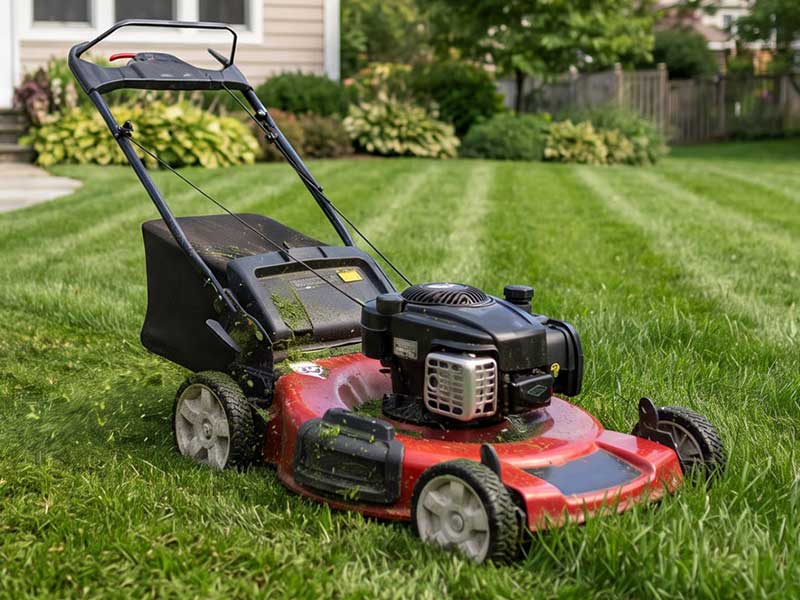
2. How to Select Lawn Mower Blades: Walk‑Behind Mower vs Multi‑Tooth Brush‑Cutter Blades
For buyers including distributors, fleet managers and OEM purchasers, blade selection should evaluate application scenario, material specification, dimensional compatibility and safety compliance rather than only comparing unit price.
2.1. Walk‑Behind Push‑Style Rotary Mower Blades (Residential & Light‑Commercial)
Walk‑behind mowers mostly work on manicured lawns with occasional small stones. Key buying criteria:
1. Dimensional matching:
Confirm blade length, center‑hole diameter, mounting pattern and blade thickness. Even minor mismatch generates destructive vibration, wearing spindle bearings and mower decks rapidly.
2. Blade style choice:
- Standard flat blades: general‑purpose grass cutting for regular lawns.
- High‑lift blades: generate stronger airflow for bagging clippings.
- Mulching blades: curved multi‑cut geometry for fine grass‑clipping recycling back into turf.
3. Material recommendation:
For residential‑grade SKUs, 65Mn high‑carbon steel delivers best cost‑performance. For rental fleets subjected to heavy use, upgrade to boron‑alloy steel to extend service intervals.
2.2. Multi‑Tooth Brush‑Cutter Blades (Brush Clearing, Overgrown Vegetation)
Multi‑tooth brush‑cutter blades are designed for thick weeds, brambles and small saplings rather than fine lawn trimming.
- 3‑tooth steel blades: preferred for heavy brush and woody stems, offering high impact tolerance.
- 20‑tooth / 40‑tooth circular saw‑style blades: deliver smoother cuts for mixed grass‑brush conditions, but require more frequent sharpening.
Critical warning: Saw‑tooth brush‑cutter blades shall not be used on standard rotary lawn mowers. Excessive tooth load can overload mower spindles and create safety hazards.
Application‑Oriented Blade Selection Guide
| Equipment Type | Typical Working Scenario | Recommended Blade Type | Priority Specs to Verify | Expected Service Interval |
|---|---|---|---|---|
| Residential walk‑behind rotary mower | Manicured home lawn, minimal rocks | 1065 high‑carbon steel, flat / mulching blade | Thickness ≥2.5 mm, balanced stamping, heat‑treatment report | 1‑2 mowing seasons |
| Commercial walk‑behind / riding mower | Municipal parks, landscaping fleets, frequent use | Boron‑alloy steel, high‑lift / mulching | HRC 48‑54 hardness, OEM‑equivalent dimensional tolerance | 20‑40 operating hours |
| Brush cutter (hand‑held) | Dense brush, brambles, small saplings | 3‑tooth or multi‑tooth saw‑style blade | Thickened steel body, tooth root fatigue resistance | 8‑25 operating hours (depends on vegetation) |
| Zero‑turn commercial mower | Large‑area premium turf | Heavy‑duty alloy‑steel mulching / high‑lift blade | 3.0‑5.0 mm thickness, strict dynamic‑balance certification | 25‑50 operating hours |
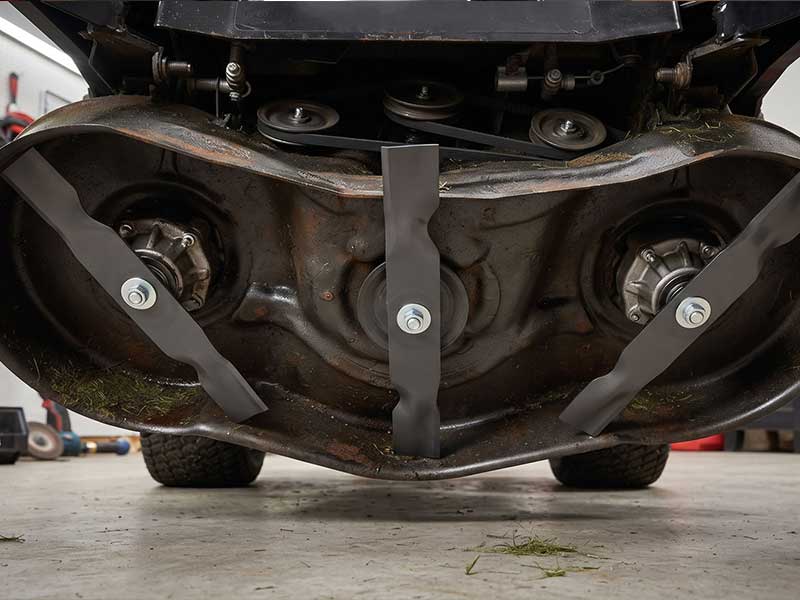
3. Manufacturing Workflow: What Makes Premium Lawn Mower Blades
Buyers can audit supplier quality by reviewing these key production stages:
1. Precision stamping: Hot‑ or cold‑rolled steel coil is stamped to achieve consistent geometry, mounting holes and blade curvature. Poor stamping creates inherent imbalance.
2. Quenching & tempering heat‑treatment: The most critical process. Cutting edges are hardened while blade bodies are tempered for toughness. Cheap suppliers skip proper tempering, resulting in brittle blades that crack on impact.
3. Local edge hardening (optional premium process): Induction hardening or carbide surfacing concentrates high hardness only along cutting edges, preserving substrate toughness.
4. Grinding & sharpening: Uniform bevel angle (normally 30‑45° for rotary lawn‑mower blades). Over‑sharp razor‑like edges chip quickly in field conditions.
5. Dynamic balancing test: Every finished blade must pass balance inspection. Unbalanced blades cause spindle failure, abnormal noise and safety risks.
6. Surface anti‑rust treatment: Paint, powder‑coating or oil passivation to prevent storage‑period corrosion for inventory shipments.
Key Quality‑Control Checkpoints Checklist
| Inspection Item | Acceptance Standard for Qualified Blades | High‑Risk Red Flag |
|---|---|---|
| Hardness distribution | Edge HRC 42‑54; blade body maintains toughness | Full‑body hardness > HRC 55 (high fracture risk) |
| Dimensional tolerance | Length, hole position, thickness within ±0.5 mm of OEM drawing | Visible deformation, oblong mounting holes |
| Stamping & surface condition | No micro‑cracks, folds, burrs along cutting edge | Tiny crack‑like notches on edge or mounting hole |
| Dynamic balance | Residual imbalance within industry acceptable threshold | Obvious wobble when freely rotating on arbor |
| Heat‑treatment traceability | Supplier can provide batch‑level metallurgy test report | No heat‑treatment records for bulk production |
4. Lawn Mower Blades Sharpening, Inspection & Maintenance
Even top‑spec lawn mower blades lose sharpness after continuous operation. Dull blades tear grass rather than shearing it, producing ragged grass tips that invite lawn disease, while also increasing engine load and fuel/power consumptionAlibaba.co.... For commercial fleets, standardized maintenance procedures reduce premature blade discard and extend usable service life.
Routine Inspection (Before Each Mowing Cycle)
1. Disconnect spark plug / power source before any service work for safety.
2. Visually check lawn mower blades for bending, nicks, cracks, elongated mounting holes or heavy rust. Any crack means immediate replacement; never weld or repair cracked blades.
3. Check mower spindle threads and mounting hardware. Replace worn bolts rather than re‑using old hardware.
Sharpening Best Practices
1. Recommended sharpening frequency:
- Commercial fleet: sharpen every 8‑12 operating hours.
- Residential walk‑behind mower: sharpen once per mowing season, or after hitting rocks or concrete curbs
2. Keep original factory bevel angle (30‑45°). Use bench grinder, angle grinder or flat file. Avoid over‑heating blade edge during grinding — blue discoloration indicates steel over‑annealing that ruins hardness. Cool blades in water intermittently during grinding.
3. Remove equal amounts of material from both ends of the blade. After sharpening, re‑test dynamic balance. An unbalanced blade after sharpening will damage mower decks and bearings.
4. Multi‑tooth brush‑cutter blades: sharpen each tooth following original tooth geometry. Replace blades when tooth roots show cracking or excessive wear instead of continuing to grind.
Storage & Inventory Management for Distributors & Fleets
1. Clean grass clippings, dirt and moisture off lawn mower blades after use. Apply light anti‑rust oil for long‑term storage.
2. Store spare inventory indoors in dry ventilation conditions; avoid damp warehouses that trigger surface rust.
3. For fleet spare‑parts stock: group SKUs according to mower model, maintain traceable batch numbers from suppliers, and rotate stock following FIFO principle.
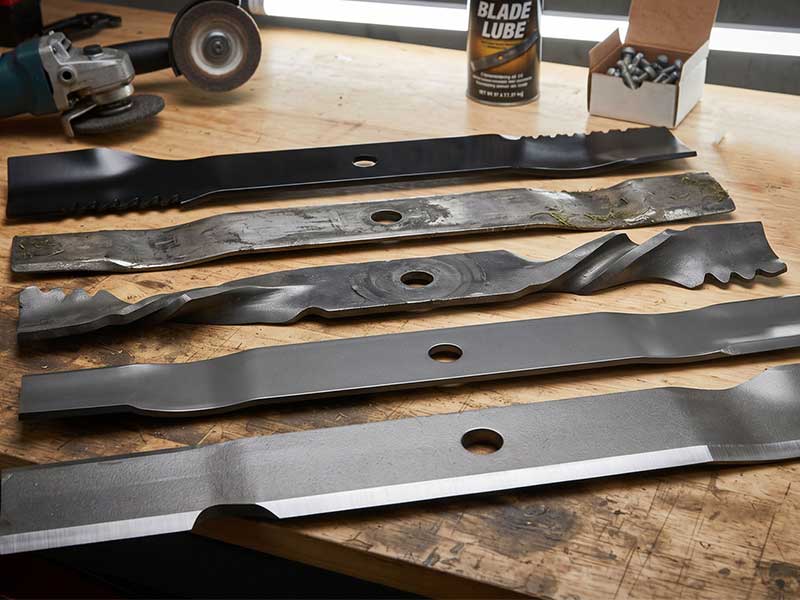
5. Common Pitfalls for B‑End Sourcing
1. Chasing ultra‑low unit price without verifying heat‑treatment quality: many cheap blades only harden surface layers or skip tempering, leading to frequent cracking and high warranty claims.
2. Ignoring dynamic‑balance requirements: unbalanced lawn mower blades lead to high after‑sales complaints about mower vibration.
3. Mis‑application: fitting brush‑cutter saw‑tooth blades onto standard rotary lawn mowers.
4. Treating sharpening as optional maintenance: many fleet operators delay service until cutting performance collapses, accelerating spindle and deck wear.
6. Evolving Trends for Lawn Mower Blades
The lawn‑mower‑blade industry sees three notable trends for B‑buyers:
1. Locally‑hardened thin replaceable blade solutions: delivering clean shear‑cut performance at reduced tip speed, lowering power consumption and flying‑debris risks for new‑platform mowers.
2. Growing demand for carbide‑tipped wear‑resistant blades in commercial landscaping segments, despite higher upfront cost, they reduce sharpening labor and blade‑replacement frequency.
3. OEM and large distributors increasingly require batch‑level metallurgy test reports and balance‑test documentation as part of supplier qualification.
7. FAQ for Lawn Mower Blade Buyers
Q1: Should we prioritize hardness or toughness for bulk‑ordered lawn mower blades?
A: Both are essential. Excessively high full‑body hardness creates brittle fracture risk; overly‑soft steel dulls rapidly. Optimal blades feature hard cutting edges paired with tough blade bodies via controlled heat‑treatment.
Q2: Can we sharpen lawn mower blades infinitely? When is replacement mandatory?
A: Sharpening is feasible only while enough base material remains. Replace lawn mower blades when you observe cracks, deep nicks, bent geometry, elongated mounting holes, or when sharpening removes too‑much blade material and alters original aerodynamic lift geometry.
Q3: What compliance points matter for North‑American market import of lawn mower blades?
A: Blades need to match ANSI/OPEI B71.1 mower safety requirements. Dimensional, weight‑balance and tip‑speed‑related design must align with host‑mower OEM specifications; non‑compliant aftermarket blades create product‑liability risks.
Q4: For brush‑cutter multi‑tooth saw‑style blades, what is the most frequent failure mode in field operation?
A: Tooth‑root fatigue cracking caused by repeated impact against stones and soil. Visual inspection of tooth roots is critical during every maintenance cycle.
RELATED NEWS
- How to Choose Right Industrial Steel Self-Dumping Forklift Hopper? 2026-09-21
- Disc Plow vs Disc Harrow for Primary & Secondary Tillage 2026-09-18
- What Factors Affect Plough Share Service Life? 2026-09-15
- 2026 Bucket Teeth Selection Guide for Soil Rock and Mining 2026-09-11
- OEM vs Aftermarket Bucket Teeth: Which Delivers Better Value for Your Fleet? 2026-09-10
CATEGORIES
LATEST NEWS
CONTACT US
Contact: Susanna Sun
Phone: +86 13706842897
E-mail: sue-sunwin@vip.163.com ; sophie091983@gmail.com
Whatsapp:+86 13706842897
Add: 1588 Jiangnan Road Ningbo High-tech Industry zone