Blog
How to Choose the Right Sickle Sections for Combine Mower and Swather Headers?
Sickle sections are the core reciprocating cutting components fitted to cutter bars of agricultural harvesters, operating in paired motion with guards to shear crop stalks cleanly, just like a heavy-duty field scissor set.
The aftermarket demand for harvester Wear Parts remains stable year-round; industry data shows sickle sections and guard assemblies account for roughly 38% of annual cutter-bar replacement spend for commercial harvesting operations, and poor blade selection can increase fuel consumption by 7–12% while shortening service intervals sharply in abrasive, rocky field conditions. For bulk buyers, matching blade profile, material heat treatment and dimensional specs before placing orders directly lowers field downtime and reduces the total cost of ownership for your end farm customers.
1. Types of Sickle Sections and Recommended Field Applications
Not all sickle sections deliver equal performance. Blade tooth geometry is the first filter when selecting inventory for different harvest seasons and crop types. Smooth, top-serrated, under-serrated and heavy-duty sickle sections each carry distinct wear behaviour and cutting mechanics.
| Blade Type | Core Design Features | Ideal Crops & Working Conditions | Limitations to Note |
|---|---|---|---|
| Smooth Sickle Sections | Plain cutting edge without serrations, clean shear geometry | Hay, alfalfa, pasture grass, high-moisture soft-stem forage | Requires frequent resharpening; fast edge wear in sandy or stony ground |
| Top-Serrated Sickle Sections | Serrations facing upward, self-sharpening during reciprocating travel | Wheat, barley, oats, rice and fine-stem cereal grains | Less suited for thick, lodged stalks with heavy debris |
| Under-Serrated Sickle Sections | Serrations oriented downward, protects tooth profile from soil abrasion | Corn, soybeans, canola, sunflower and lodged thick-stem crops | Slightly higher cutting resistance than top-serrated variants |
| Heavy-Duty Thick Sickle Sections | Increased plate thickness, reinforced root section, higher impact toughness | Stony fields, uneven ground, rocky pasture, continuous high-volume harvesting | Higher unit weight; compatible only with matched heavy-duty guards |
For most western grain belts, top-serrated sickle sections remain the highest-volume SKU for wholesale stocking, while under-serrated lines are a fast-moving add-on for soybean and corn harvest fleets.
Smooth sickle sections are popular with hay and silage contractors who prioritise tear-free forage quality.
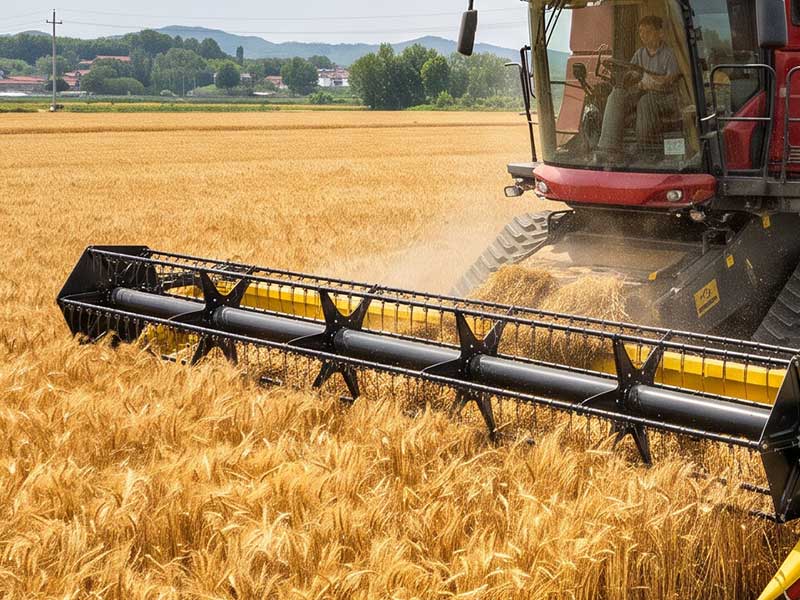
2. Manufacturing Process & Material Recommendations
The service life of sickle sections depends far more on metallurgy and controlled heat treatment than raw steel grade alone.
At Lihuacasting, we combine precision blanking, CNC tooth forming, controlled quenching and tempering, plus optional hard surfacing for premium batches, balancing edge hardness and substrate toughness to avoid two common failure modes: rapid edge rounding and sudden blade cracking under impact.
| Material Grade | Typical Hardness (HRC) | Surface Treatment Options | Best For Bulk Procurement |
|---|---|---|---|
| 65Mn High Carbon Spring Steel | 48–54 | Black oxide, spray paint, electrophoresis coating | Standard cereal, hay, regular farm conditions; balanced cost and performance |
| T9 Tool Steel | 52–58 | Chrome plating, hard-facing overlay | High-hour commercial harvesters, frequent continuous cutting cycles |
| Boron / NM400 Wear-Resistant Steel | 45–52 | Chrome plating, powder coating | Rocky, abrasive soil, heavy-duty replacement lines, premium aftermarket branding |
Many low-cost sickle section suppliers skip stress relief after stamping, which creates hidden microcracks that propagate once the blade strikes stones.
Our process includes low-temperature stress relief after tooth machining, followed by selective edge hardening: the cutting zone holds high hardness for wear resistance while the mounting root retains ductility to absorb impact loads.
For distributors building a premium product line, boron steel sickle sections can extend average working life by 25–35% compared to conventional 65Mn blades in abrasive fields, making them a strong upsell option for your catalog.
3. Critical Dimensional Checklist for Sickle Section Replacement
One of the most common sourcing mistakes for importers is ordering visually similar sickle sections that fail to fit existing guards, rivets and cutter bar slots.
Before confirming drawings or sample approval, verify the four core geometric parameters listed below. Even a 0.5 mm deviation in hole spacing will cause binding, uneven cutting and accelerated wear across the full sickle bar.
| Key Parameter | Definition | Standard Checkpoints for Header Compatibility |
|---|---|---|
| Hole Spacing | Centre-to-centre distance between mounting rivet or bolt holes | Match OEM part drawing; common imperial sizes for North American headers: 3 in, 3.25 in |
| Overall Length & Base Width | Outer tip length and bottom mounting width | Confirm whether ordering end sections or centre sections for the sickle bar |
| Mounting Hole Diameter | Inner diameter for rivets or carriage bolts | Mismatched holes lead to loose assembly and blade shifting during reciprocation |
| Serrations Per Inch | Tooth density along cutting edge | Fine serrations for soft forage; coarse / ultra-coarse teeth for thick stalks and heavy debris |
We maintain dimensional libraries for mainstream header part numbers and can cross-reference your OEM part numbers to produce interchangeable sickle sections for John Deere, Case IH, New Holland, Claas and Kubota cutter bars.
If you operate private-label aftermarket parts, our engineering team can also modify tooth profiles or adjust thickness without reworking your existing guard inventory.
4. How to Judge the Wear Level of Sickle Sections
Even premium sickle sections will gradually lose cutting performance before obvious fracture occurs, so systematic wear inspection helps distributors and end farmers avoid unexpected header downtime and excessive grain loss. The cutting system works as a matched set: sickle sections and guards wear together, and replacing only one side usually shortens the service life of the new part.
Field cutting quality is the first quick screening signal. A healthy set of sickle sections delivers clean, sheared stalks with uniform stubble height. When wear progresses, crops are torn rather than cut, leaving ragged stems, uncut patches and increased header plugging. Industry testing shows that an out-of-spec cutter bar assembly can raise fuel consumption by 7–12% and push harvest losses up by 2–5%.
Visual inspection checks for rounded cutting edges, flattened or missing serrations, tip breakage, body cracks and elongated mounting holes.
For serrated sickle sections, once both sides of teeth become smooth and rounded, the self-sharpening function fails completely. For accurate judgement, use a feeler gauge to measure clearance between sickle sections and guards. Standard tip clearance should stay below 0.5 mm, while root clearance is limited to 1.0 mm with a hard maximum of 1.5 mm. If guard edges are rolled and rounded, guards must be replaced together with sickle sections.
| Wear Level | Visual Feature | Clearance Reading | Recommended Action |
|---|---|---|---|
| Good / New | Sharp edge; full tooth profile; no groove | Tip: ≤0.5 mm; root ≤1.0 mm | Continue service, routine inspection |
| Light Wear | Slight rounding of cutting edge; minor tooth dulling | Tip: 0.5–0.8 mm; clean cut mostly maintained | Keep running; pre-order replacement parts ahead of harvest rush |
| Moderate Wear | Visible wear groove; flattened serrations; occasional torn stalks | Tip: 0.8–1.5 mm; uneven cutting | Replace sickle sections and matched guards before heavy crop season |
| Severe Wear / Failed | Cracked, chipped, broken tip; elongated holes; deep wear track | Tip gap >1.5 mm; frequent plugging | Immediate replacement of the full cutting assembly |
For wholesale planning, expected working hours vary by material. Standard 65Mn sickle sections deliver roughly 80–120 working hours under normal cereal conditions, T9 tool steel reaches 120–180 hours, while boron and NM400 wear-resistant steel sickle sections can extend service life to 180–260 hours, though rocky fields reduce this lifespan by roughly 30%.
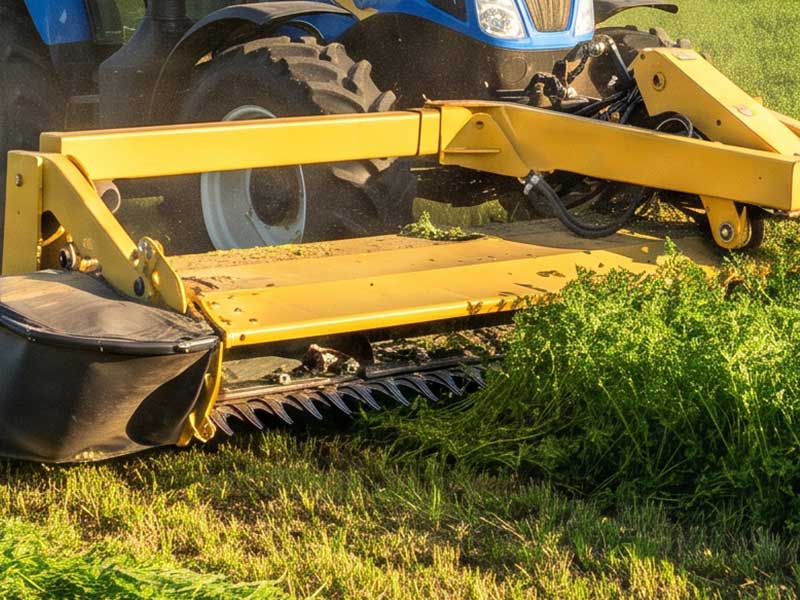
5. Sickle Section Selection Flow for Distributors
When building your product mix, start with the primary crop your regional customers harvest.
Cereal grain markets should prioritise top-serrated sickle sections as the flagship SKU.
Soybean, canola and corn regions need a solid stock of under-serrated blades.
Hay and silage contractors will repeatedly order smooth sections.
If your territory includes rocky upland farms, separate a heavy-duty boron steel line to capture premium replacement sales.
Always pair sickle section purchases with matching guards. A high-quality sickle section will wear prematurely if paired with worn or misaligned guards, creating extra service calls for your dealer network. We offer matched guard and sickle section bundles to help you package complete cutter bar repair kits for faster turnover.
6. Market Insight for Wholesale Buyers
The North American and European agricultural aftermarket continues to favour reliable, consistent replacement wear parts rather than ultra-low-cost throwaway blades. Farmers and service shops are increasingly calculating cost per cutting hour instead of unit price; a durable sickle section that requires fewer changeouts delivers stronger long-term value and builds repeat orders for your business. As an OEM casting manufacturer, Lihuacasting supports mixed-container orders, batch inspection reports, private labeling and consolidated shipments for agricultural parts wholesalers.
If you need custom sickle sections, matched guard assemblies, or want to expand your agricultural wear parts catalog with OEM casting solutions, contact Lihuacasting today. Our engineering team can review your part numbers, drawings and target price tier to quote stable, high-volume sickle sections built for the rigorous reciprocating work of modern combine harvesters, swathers and mowers.
RELATED NEWS
- Heavy-Duty Disc Harrows vs. Light-Duty Disc Harrows 2026-11-03
- How to Choose the Right Subsoiler Shank for Your Implement? 2026-10-29
- Disc Harrow Guide: Adjustment, Maintenance, Troubleshooting & Working Width Sele 2026-10-28
- How to Overcome Tool Wear Challenges When Machining High-Hardness Iron Castings? 2026-10-23
- Low-Temperature Charpy Impact Testing for Off-Road Trailer Castings 2026-10-20
CATEGORIES
LATEST NEWS
CONTACT US
Contact: Susanna Sun
Phone: +86 13706842897
E-mail: sue-sunwin@vip.163.com ; sophie091983@gmail.com
Whatsapp:+86 13706842897
Add: 1588 Jiangnan Road Ningbo High-tech Industry zone