Blog
How to Make Forged Lower Dump Trailer Hinges?
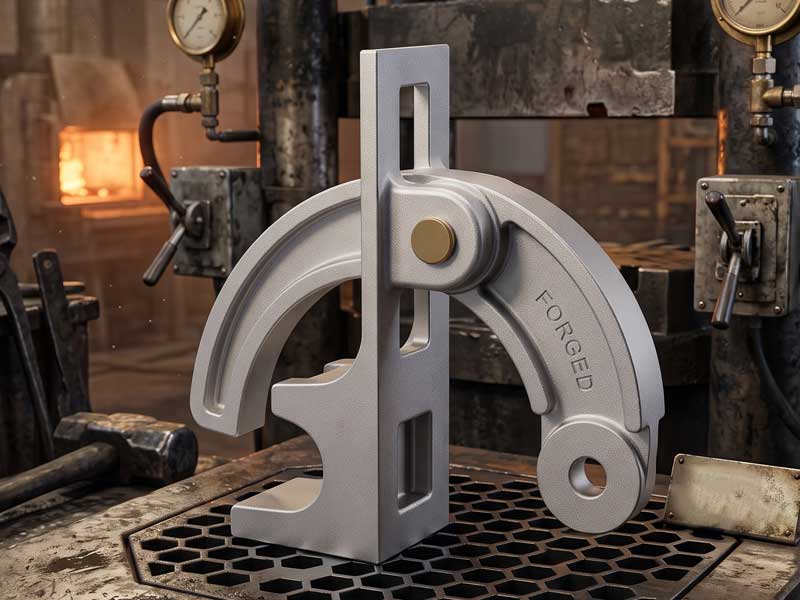
Dump trailer hinges are the core pivoting components of dump trailers, connecting the trailer body and chassis to ensure smooth, safe lifting and dumping operations. Among mainstream types, Lower Dump Hinge and Forged Hinge dominate the heavy-duty trailer market due to their high load capacity, wear resistance, and long service life.
With the booming development of global construction, mining, and logistics industries, the dump trailer accessory market maintains steady growth. According to Grand View Research data, the global heavy-duty Trailer Parts market, including dump trailer hinges, will grow at a CAGR of 6.8% from 2024 to 2030, while the professional forged hinge segment achieves a 7.2% annual growth rate, far exceeding ordinary stamping hinge products .
Mastering how to manufacture high-quality dump trailer hinges is crucial for trailer manufacturers, aftermarket suppliers, and custom processing factories to improve product competitiveness.
This article provides a professional, actionable step-by-step guide to making dump trailer hinges, focusing on Lower Dump Hinge and Forged Hinge production processes. It also includes industry-standard parameter comparison and process specification tables to help you produce durable, market-compliant dump trailer hinges that meet commercial and industrial heavy-load usage needs.
1. Industry Market & Product Demand Overview
In the global dump trailer accessory market, low-quality stamping hinges are gradually being phased out, while Forged Hinge and Lower Dump Hinge have become mainstream products for mid-to-high-end trailers.
Industry data shows that forged heavy-duty hinges account for 68.4% of the high-load dump trailer supporting market, and lower dump hinges are the standard configuration for 80% of medium and large dump trailers in North America and Europe . The core consumer demands focus on load resistance, corrosion resistance, and fatigue resistance, which directly determine the material selection and process standards of dump trailer hinges.
The following table compares the core market attributes and application scenarios of three mainstream dump trailer hinge types, helping you clarify production positioning:
| Hinge Type | Market Share | Core Application Scenarios | Service Life | Market Growth Rate |
| Forged Hinge | 68.4% | Heavy-duty mining trailers, engineering dump trailers, overloaded transport trailers | 8-10 Years | 7.2% CAGR (2024-2030) |
| Lower Dump Hinge | 22.7% | Medium-sized construction trailers, agricultural dump trailers, municipal waste transport trailers | 5-7 Years | 6.5% CAGR (2024-2030) |
| Ordinary Stamping Dump Hinge | 8.9% | Light-duty small trailers, short-distance temporary transport trailers | 2-3 Years | 2.1% CAGR (2024-2030) |
2. Pre-Production Preparation: Materials & Tool Specifications
The quality of dump trailer hinges depends primarily on material selection and precision processing standards. For professional Forged Hinge and Lower Dump Hinge production, low-carbon alloy steel is the preferred material, which integrates high toughness and compression resistance to adapt to frequent lifting and vibration of dump trailers in harsh working environments such as mud, dust, and high load .
The following table sorts out the standard materials, processing tools, and core parameter requirements for manufacturing high-quality dump trailer hinges, complying with international trailer accessory industry standards:
| Production Item | Forged Hinge Standard Specification | Lower Dump Hinge Standard Specification |
| Preferred Material | 4140 Alloy Steel / 45# Forged Steel | Q355 High-Strength Structural Steel |
| Surface Treatment | Hot-dip Galvanizing + Black Oxide Treatment (rust & wear resistant) | Electro-galvanizing + Grease Filling (low friction, anti-corrosion) |
| Load Capacity | Max 25-40 Ton Heavy Load | Max 10-20 Ton Medium Load |
| Core Processing Tools | Forging Press, CNC Lathe, Heat Treatment Furnace, Precision Grinder | Laser Cutter, Bending Machine, Welding Robot, Drilling Machine |
| Tolerance Standard | ±0.02mm Precision Machining | ±0.05mm Precision Machining |
| Lubrication Design | Built-in Grease Nipple, Full-axis Lubrication | Side Grease Injection Hole, Local Lubrication |
3. Step-by-Step Process to Make Dump Trailer Hinges
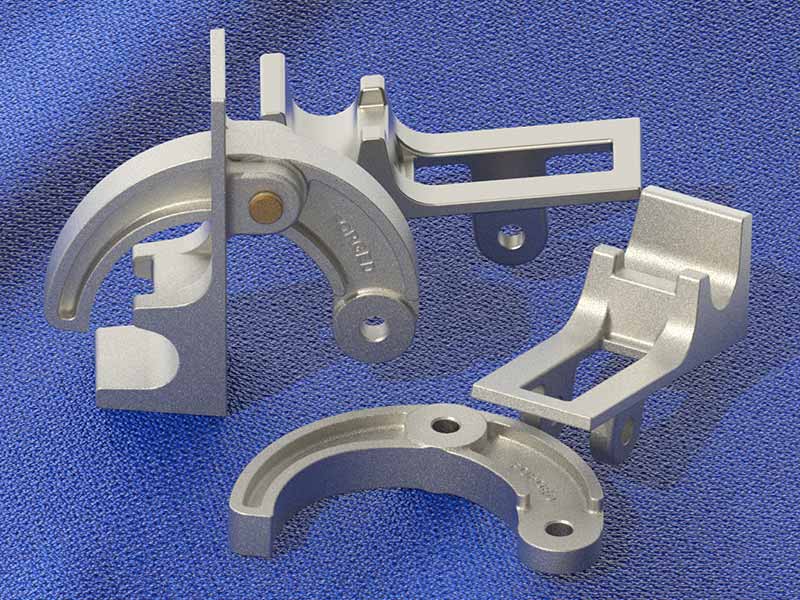
The production of dump trailer hinges is divided into two core processes: hot forging process for Forged Hinge and precision bending & welding process for Lower Dump Hinge. The following standardized production steps ensure stable product quality, consistent with mainstream factory production processes in the European and American markets.
3.1 Manufacturing Process of Forged Hinge (Heavy-Duty Dump Trailer Hinge)
Forged Hinge is the highest-standard dump trailer hinge product, relying on hot forging to optimize the internal metal structure of the material, eliminating pores and cracks, and greatly improving structural strength and fatigue resistance . It is the first choice for heavy engineering dump trailers.
Step 1: Material Cutting & Preheating
Cut 4140 alloy steel or 45# forged steel according to customized size parameters, remove burrs and oxide layers on the surface. Put the steel material into a constant-temperature heating furnace for preheating at 1150℃-1200℃ to ensure uniform material softening and facilitate integral forging forming.
Step 2: Hot Forging Forming
Use a 160-ton hydraulic forging press for one-time integral forging to form the hinge leaf, hinge shaft sleeve and connecting base. Different from stamping parts, integral forging ensures no splicing gaps, effectively avoiding fracture and deformation under long-term heavy load.
Step 3: Heat Treatment & Tempering
Perform quenching and high-temperature tempering treatment on the forged blank to eliminate forging stress, improve material hardness and toughness, and prevent the Forged Hinge from brittle fracture in low-temperature and high-vibration working environments.
Step 4: Precision Machining
Use CNC lathes and precision grinders to process the hinge shaft hole and matching surface, strictly controlling the tolerance within ±0.02mm. Drill and tap the grease nipple hole to reserve the lubrication structure required for long-term operation.
Step 5: Surface Anti-Corrosion Treatment & Finishing
Carry out hot-dip galvanizing and black oxide treatment to form a double anti-corrosion layer. Finally, polish the surface, remove residual galvanizing slag, and conduct load pressure test and swing fatigue test to ensure the product meets heavy-duty industry standards.
3.2 Manufacturing Process of Lower Dump Hinge (Medium-Duty Dump Trailer Hinge)
Lower Dump Hinge is installed at the bottom connection of the dump trailer body, with the characteristics of compact structure, flexible rotation and convenient installation. It is widely used in medium-load dump trailers and has high cost performance in the commercial aftermarket .
Step 1: Laser Precision Cutting
Select Q355 high-strength steel plate, use a laser cutting machine to cut the hinge leaf and bottom connecting plate according to standard drawings, ensuring smooth cutting edge without burrs to avoid assembly jamming.
Step 2: Cold Bending & Shaping
Use a professional bending machine to bend the steel plate at a fixed angle to form the standard arc structure of the lower hinge, ensuring the rotation fit gap is uniform and the opening and closing is smooth without stuck.
Step 3: Precision Welding & Reinforcement
Adopt robot automatic welding to weld the hinge shaft sleeve and the bottom plate, add reinforcing ribs at the stress concentration position, improve the overall structural stability, and avoid welding deformation.
Step 4: Drilling & Lubrication Structure Processing
Drill fixed mounting holes and side grease injection holes, deburr all holes, and ensure that the grease can fully cover the rotating shaft during lubrication to reduce friction loss .
Step 5: Surface Treatment & Quality Inspection
Conduct electro-galvanizing anti-rust treatment, fill high-temperature resistant lubricating grease in advance. Conduct 10,000 times of opening and closing fatigue tests and load-bearing tests to screen qualified Lower Dump Hinge products.
4. Key Quality Control & Industry Compliance Standards
In the global dump trailer accessory market, qualified dump trailer hinges must meet ISO 9001 quality system certification and North American SAE trailer accessory industry standards. Industry data shows that unqualified hinges with insufficient processing precision and unqualified heat treatment are the main cause of trailer dumping failure, accounting for 42.6% of trailer accessory failure cases . Therefore, strict quality control must be implemented in the production process.
For Forged Hinge, the key inspection points include forging density, heat treatment hardness and ultimate load capacity; for Lower Dump Hinge, the focus is on welding firmness, rotation flexibility and anti-corrosion performance. All finished products must pass fatigue test, load test and salt spray test before leaving the factory to adapt to outdoor and harsh industrial working environments.
5. Market Advantages of High-Quality Custom Dump Trailer Hinges
With the upgrading of the trailer aftermarket, customers are increasingly inclined to choose high-durability Forged Hinge and standardized Lower Dump Hinge. Compared with ordinary stamping hinges, professionally manufactured dump trailer hinges have 3-5 times longer service life, lower maintenance cost, and higher market recognition. The global dump trailer hinge aftermarket demand increases by 12.4% every year, and high-quality customized products have huge export market potential .
RELATED NEWS
- Common Casting Defects in Trailer Towing Rings and How to Prevent Them 2026-10-15
- Ductile Iron vs. Carbon Steel Engineering Guide for Heavy-Duty Agricultural Trai 2026-10-13
- Heavy Duty Disc Harrow: How to Choose the Right Model? 2026-10-09
- How to choose the right lawn mower blades? 2026-09-23
- How to Choose Right Industrial Steel Self-Dumping Forklift Hopper? 2026-09-21
CATEGORIES
LATEST NEWS
CONTACT US
Contact: Susanna Sun
Phone: +86 13706842897
E-mail: sue-sunwin@vip.163.com ; sophie091983@gmail.com
Whatsapp:+86 13706842897
Add: 1588 Jiangnan Road Ningbo High-tech Industry zone