Blog
Disc Harrow Troubleshooting: Uneven Soil, Bearing Selection & Cost Reduction for Tillage Operations
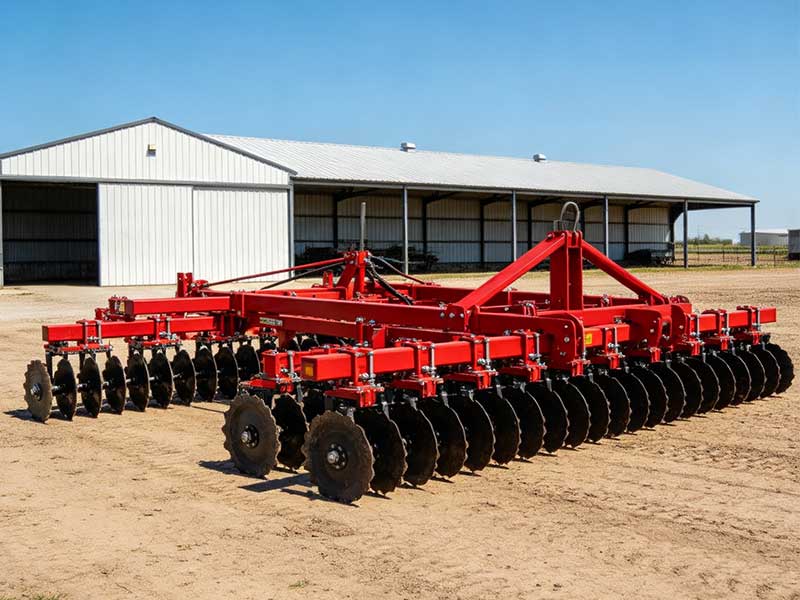
Disc harrow performance directly shapes seedbed uniformity, crop emergence and long-term tillage profitability for large farms, rental fleets and agricultural equipment distributors.
Many operators notice inconsistent soil mixing, ridged surfaces and variable tillage depth after running their disc harrow, and most root causes trace back to disc alignment, worn disc blades, faulty disc harrow bearings or poorly calibrated operating settings, rather than machine age alone.
1. Why Is Your Disc Harrow Leaving Uneven Soil?
Uneven soil behind a disc harrow creates patchy germination, poor herbicide incorporation and increased risk of soil erosion. and industry field surveys show misalignment and worn Wear Parts account for nearly 62% of uniformity complaints in commercial tillage operations.
Common triggers include unequal gang height, bent disc arms, uneven disc blade wear, damaged disc harrow bearings that let discs wobble, incorrect disc attack angle and inconsistent tractor forward speed. Even minor play within bearing hubs will make individual discs run at variable depth, leaving untilled ridges or overworked low spots across the field.
Table 1: Disc Harrow Setting vs Soil Uniformity Benchmark
| Disc Attack Angle | Operating Speed | Target Tillage Depth | Typical Soil Surface Deviation | Suitability |
|---|---|---|---|---|
| 12° | 8–10 km/h | 60–70 mm | 25–35 mm | Light residue, fine seedbed finishing |
| 15° | 10–12 km/h | 85–90 mm | 12–20 mm | Balanced mixing, most loam fields |
| 17° | 12–14 km/h | 95–110 mm | 18–28 mm | Heavy stubble, clay soil, residue burial |
When the attack angle is too low, discs slide instead of cutting, leaving horizontal streaks; when speed exceeds 14 km/h on rough ground, the disc harrow bounces and depth fluctuates sharply.
We recommend buyers inspect cast gang brackets and bearing hubs at the start of each tillage season — cast components manufactured from QT450-10 ductile iron maintain stable geometry under repeated shock loads, while low-grade castings tend to deform and pull gangs out of parallel over time, worsening uneven tillage.
2. What to Look for in Disc Harrow Bearings
Disc harrow bearings operate in one of the harshest agricultural environments, exposed to sand, mud, moisture and continuous axial shock loads. Industry aftermarket failure data indicates 30–40% of premature disc harrow bearing failures stem from seal damage and contamination ingress, not raw material fatigue. For OEM procurement and replacement inventory planning, buyers must evaluate four core criteria: sealing structure, load rating, material specification and service interval.
Table 2: Disc Harrow Bearing Performance Comparison by Seal Design
| Bearing Type | Seal Configuration | Average Field Service Life | Best Soil Condition | Key Material Notes |
|---|---|---|---|---|
| Standard Single-Lip Seal | Single rubber lip | 200–350 hours | Sandy, low-moisture loam | Carbon steel raceway, basic grease fill |
| Double-Lip Sealed | Double contact rubber seal | 450–600 hours | Mixed soil, occasional mud | Case hardened steel, anti-corrosion coating |
| Triple-Lip Heavy-Duty Seal | Triple lip + dust excluder | 700–1000+ hours | Wet clay, rocky high-abrasion fields | 42CrMo alloy sleeves, reinforced hub casting |
Before approving a bearing for your disc harrow assembly, check for radial and axial play by hand: excessive play confirms internal wear and will create the same wobble that causes uneven soil. Cross-reference static and dynamic load ratings against your disc harrow gang weight and working speed.
3. How to Reduce Disc Harrowing Operating Costs
Fuel, downtime labor and emergency wear-part replacement dominate disc harrowing operating costs, and many buyers focus only on upfront bearing or blade price instead of total cost of ownership.
Independent farm machinery cost tracking shows proactive maintenance and quality cast components can cut annual disc harrow operating expenditure by 18–27% for continuous-use commercial tillage equipment.
Table 3: Annual Disc Harrow Operating Cost Breakdown & Savings Actions
| Cost Category | Typical Share of Total Tillage Cost | High-Impact Reduction Strategy |
|---|---|---|
| Fuel Consumption | 48% | Optimize disc angle, avoid over-depth tillage, replace dull disc blades |
| Bearing & Hub Replacement | 24% | Upgrade to triple-sealed bearings + QT500-7 cast hubs, scheduled greasing |
| Downtime & Field Labor | 21% | Pre-season inspection, stock matched OEM wear parts, eliminate mid-season breakdowns |
| Miscellaneous Fasteners & Repairs | 7% | Standardize high-strength cast brackets, torque all gang bolts to spec |
Fuel waste spikes when worn bearings create drag in the disc gang; each seized or stiff disc harrow bearing adds measurable tractor load and burns extra diesel every hectare.
4. Final Takeaways for Disc Harrow Buyers
Uneven soil, short bearing service life and high running costs are interconnected problems for disc harrow operators. Start with annual calibration of disc gangs and attack angles, then standardize bearing inspection using the seal and load criteria above, and shift procurement decisions from lowest unit price to long service life and compatible cast component quality.
Reliable QT450-10 / QT500-7 ductile iron and ZG230-450 cast steel hubs support consistent bearing alignment, which delivers uniform soil preparation and fewer unplanned stops.
Lihuacasitng specializes in OEM casting of disc harrow hubs, gang brackets and agricultural wear parts, with full heat treatment, non-destructive testing and custom machining for distributors and equipment manufacturers across North America, Europe and Australia. Contact our technical team for disc harrow component drawings, material data sheets and bulk OEM pricing.
RELATED NEWS
- Plough Point Replacement Complete Guide for Farmers & Equipment Operators 2026-11-13
- Why Does Plough Point Hardness Matter? 2026-11-12
- How to Choose the Right Sickle Sections for Combine Mower and Swather Headers? 2026-11-05
- Heavy-Duty Disc Harrows vs. Light-Duty Disc Harrows 2026-11-03
- How to Choose the Right Subsoiler Shank for Your Implement? 2026-10-29
CATEGORIES
LATEST NEWS
CONTACT US
Contact: Susanna Sun
Phone: +86 13706842897
E-mail: sue-sunwin@vip.163.com ; sophie091983@gmail.com
Whatsapp:+86 13706842897
Add: 1588 Jiangnan Road Ningbo High-tech Industry zone