Blog
OEM vs Aftermarket Bucket Teeth: Which Delivers Better Value for Your Fleet?
When sourcing bucket teeth for excavators, backhoes and loaders, fleet managers and procurement buyers constantly face the same critical decision: OEM bucket teeth or aftermarket bucket teeth. Many buyers only compare upfront unit price, ignoring wear life, downtime risk and total cost of ownership (TCO).
This blog breaks down hard field data, material performance and procurement tradeoffs to help you decide which replacement bucket teeth are truly more economical for your jobsite.
1. OEM vs Aftermarket Bucket Teeth
The global bucket tooth market split stands at 55.3% OEM and 44.7% aftermarket, with the aftermarket segment growing at a faster 6.8% CAGR versus OEM’s 4.6% through 2034, as contractors and mining operators shift to value-based procurement instead of defaulting to OEM parts.
But not all aftermarket bucket teeth are equal. Premium aftermarket GET can match OEM performance, while low-grade budget bucket teeth create expensive unplanned downtime and adapter damage.
Table 1: Material & Hardness Performance Comparison (OEM vs Aftermarket Bucket Teeth)
| Grade | Surface Hardness (HRC) | Heat Treatment | Typical Application | Impact Consistency |
| OEM Bucket Teeth | 56–62 | Full through-hardening, factory alloy recipe | Heavy rock, mining, high-impact excavation | Excellent, batch-to-batch stable |
| Premium Aftermarket Bucket Teeth | 54–60 | Controlled quenching & tempering, certified alloy | Mixed rock, aggregate, heavy construction | Good, with material test reports |
| Budget Aftermarket Bucket Teeth | 42–50 | Inconsistent surface-only hardening | Light soil, non-abrasive digging | Poor, high risk of sudden breakage |
OEM bucket teeth use proprietary alloy formulations and strictly controlled heat treatment to maintain uniform hardness across the tooth body.
Premium aftermarket bucket teeth from qualified manufacturers adopt similar metallurgical standards, while cheap aftermarket bucket teeth often only harden the surface layer.
Once this thin layer wears away, rapid abrasion and tooth cracking follow, which can also damage bucket adapters and pins, raising your GET maintenance bill.
Table 2: Wear Life & Field Operating Hour Data
| Product Type | Average Wear Life (Rock/Abrasive Site) | Average Wear Life (Clay/Soft Soil) | Cost Per Operating Hour |
| OEM Bucket Teeth | 320–420 hours | 650–800 hours | $0.13–$0.16 |
| Premium Aftermarket Bucket Teeth | 270–360 hours | 580–720 hours | $0.09–$0.12 |
| Budget Aftermarket Bucket Teeth | 80–180 hours | 220–350 hours | $0.21–$0.35 |
Field fleet tests show that premium aftermarket bucket teeth deliver roughly 85–95% of OEM wear life at a much lower unit price.
Budget aftermarket bucket teeth appear cheap on the purchase order, but their short service life increases replacement frequency and labour cost.
Every unplanned tooth swap can stop production, and broken bucket teeth can enter crushers or damage bucket assemblies, creating repair costs far larger than the savings on parts.
Table 3: Procurement & Total Cost of Ownership Breakdown
| Cost Factor | OEM Bucket Teeth | Premium Aftermarket Bucket Teeth | Budget Aftermarket Bucket Teeth |
| Unit Purchase Price | High | 30–40% lower than OEM | 50–60% lower than OEM |
| Lead Time | 7–14 days; dealer stock may be limited | 5–10 days, flexible bulk supply | Fast, but variable quality |
| Warranty Coverage | Manufacturer structural warranty | Limited warranty (certified suppliers) | Usually no warranty |
| Downtime Risk | Low | Medium-Low (with supplier validation) | High |
| Minimum Order Quantity | Often high for direct factory orders | Low-Medium, supports fleet bulk orders | Very low |
OEM bucket teeth guarantee perfect fit for your machine model, full OEM warranty and zero dimensional mismatch risk. The downside is higher pricing and longer lead times during supply chain disruptions.
Premium aftermarket bucket teeth from reliable GET manufacturers such as Lihuacasting maintain tight casting tolerances and OEM interchangeable part numbers, suitable for bulk fleet procurement and recurring replacement bucket teeth orders.
Budget aftermarket bucket teeth carry the biggest hidden cost: unplanned downtime and secondary damage to bucket adapters, pins and bucket lip.
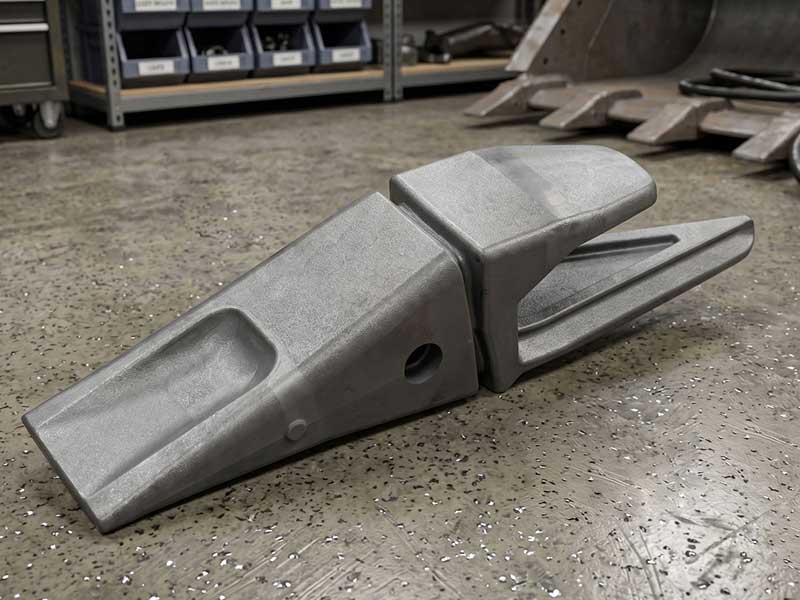
2. When to Choose OEM Bucket Teeth
2.1. Permanent high-impact mining, blasted rock and heavy quarry operations with zero tolerance for breakdowns.
2.2. New equipment warranty retention, where your machine contract requires genuine OEM GET parts.
2.3. One-off critical projects where production shutdown penalties are extremely high.
3. When Premium Aftermarket Bucket Teeth Make More Sense
3.1. General construction, roadwork, sand and aggregate excavation.
3.2. Large fleets with regular bucket teeth replacement cycles and tight procurement budgets.
3.3. Multi-model fleets where you want a single supplier for all your ground engaging tools.
3.4. Projects where you can pre-test a small batch of aftermarket bucket teeth before full rollout.
4. Key Checklist Before Buying Replacement Bucket Teeth
- Request material test reports confirming alloy composition and HRC hardness.
- Verify dimensional tolerance and part number compatibility with your bucket adapter system.
- Run a small field trial on one machine to measure real wear life before bulk purchasing.
- Confirm supplier casting process, heat treatment controls and batch inspection standards.
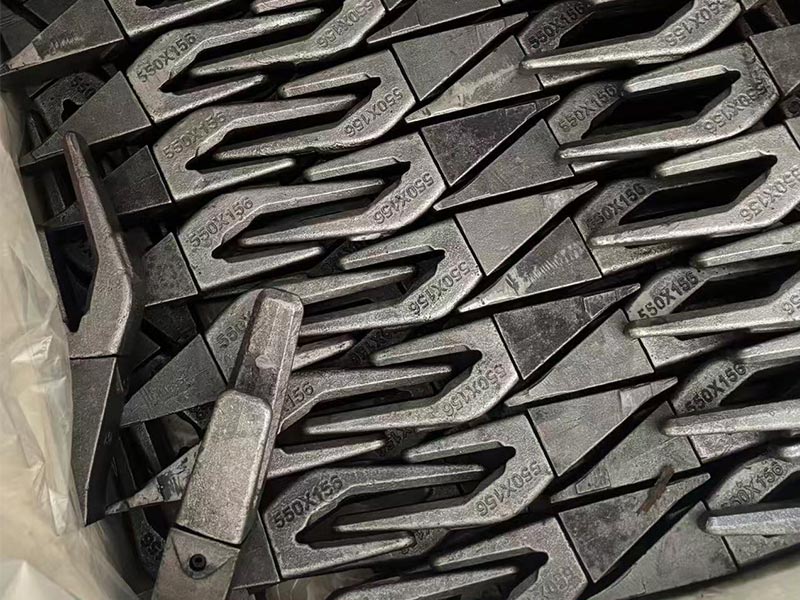
5. Final Verdict
OEM bucket teeth remain the safest choice for extreme heavy-duty mining and high-penalty jobsites. However, for most construction and aggregate operations, premium aftermarket bucket teeth deliver superior total cost of ownership, balancing acceptable wear life, lower unit cost and flexible delivery.
The real danger lies in low-grade budget aftermarket bucket teeth. Their low upfront price is misleading, and frequent failures will erase any savings on bucket teeth and create expensive equipment downtime.
RELATED NEWS
- Agricultural Ground‑Engaging Tools: Aftermarket & Sourcing 2026-09-08
- Mining Truck Dump Body:Trends, Material Technology & Procurement Guide for 2026‑ 2026-09-03
- How to Reduce Loader Blade Fleet Operating Costs? 2026-09-01
- Excavator Bucket Side Cutters Purchasing Guide for GET Wear‑Resistant Side Edges 2026-08-27
- How to Select Proper Bolt‑on Reversible Cutting Edges for Excavator & Heavy Mach 2026-08-25
CATEGORIES
LATEST NEWS
CONTACT US
Contact: Susanna Sun
Phone: +86 13706842897
E-mail: sue-sunwin@vip.163.com ; sophie091983@gmail.com
Whatsapp:+86 13706842897
Add: 1588 Jiangnan Road Ningbo High-tech Industry zone