Blog
How Casting Addresses Industry Pain Points Through Exceptional Dimensional Accuracy and Material Versatility?
Precision Casting (utilizing the silica sol / water glass investment casting processes) leverages ultra-high dimensional accuracy and compatibility with a full spectrum of materials to specifically resolve manufacturing pain points across six major industries: construction machinery, automotive, wind power, hydraulic valves, medical equipment, and petrochemicals.
Core Technical Parameters:
Dimensional accuracy ranging from CT4 to CT7 grades; tolerances of ±0.1 to 0.3 mm; surface finish (Ra) between 1.6 and 6.3 μm. Capable of casting thin walls (0.3–1 mm) and fine holes (0.5 mm). Compatible with a comprehensive range of metal alloys, including carbon steel, alloy steel, stainless steel, superalloys, duplex steel, and titanium alloys.
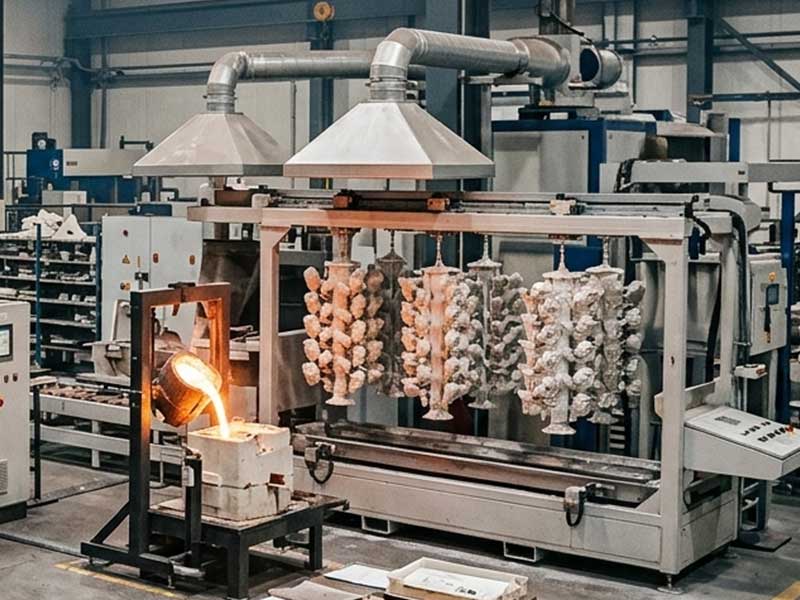
I. High Precision: Resolving Five Universal Pain Points Across All Industries
1. Transitioning from Multi-Part Assembly to Integrated Casting: Reducing Assembly Costs
Industry Pain Point: Components produced via CNC machining or forging often require assembly from multiple separate parts, leading to large assembly gaps, abnormal noise, oil leakage, high fastener costs, and elevated failure rates.
Precision Casting Solution: Integrated, single-piece casting—free of parting lines—consolidates several discrete components into a single finished casting, thereby eliminating the need for bolts and gaskets. The precision of the casting matches or exceeds original equipment manufacturer (OEM) assembly tolerances, boosting assembly efficiency by over 50%.
Examples: Excavator bucket tooth assemblies, hydraulic valve bodies, and EGR exhaust housings—traditionally assembled from five separate parts—are now produced as a single, precision-cast finished product.
2. Excessive Machining Allowances: Reducing Material Waste and Labor Hours
Industry Pain Point: Sand casting typically yields dimensional accuracy grades of CT8–CT12 with tolerances exceeding ±1 mm. This results in heavy, oversized raw castings that require extensive CNC machining, leading to significant material loss (steel waste) and machining costs that can account for up to 40% of the total production cost.
Precision Casting Solution: Near-net-shape manufacturing—a process that produces castings requiring minimal or zero subsequent machining on critical mating surfaces. This approach boosts raw material utilization rates from 65% to 92% and slashes machining labor hours by 60%.
3. Poor Sealing and Pressure Leakage (A Core Challenge in Hydraulics and Valves)
Industry Pain Point: Raw castings suffer from significant dimensional variations and rough surface finishes, resulting in high costs for grinding sealing surfaces and leading to oil or gas leakage under pressure.
Investment Casting Solution: Molds featuring low-roughness cavities allow for sealing surfaces to be cast to precise dimensional specifications, ensuring reliable pressure-sealing performance even under high-pressure operating conditions; this solution has reduced leakage-related failure rates in the pump and valve industry by 80%.
4. Inability to Form Complex Internal Cavities and Fine Flow Channels
Industry Pain Point: Traditional forging and machining methods struggle to create complex internal oil passages, micro-cooling pores, and thin-walled curved surfaces.
Investment Casting Solution: Wax patterns enable the replication of any complex internal cavity design, allowing for the integral formation of features as fine as 0.5mm through-holes and 0.3mm thin walls; this technology has successfully enabled the mass production of components such as turbocharger impellers and cooling valve bodies.
5. Poor Dimensional Consistency in Batch Production and High Post-Sales Rework Rates
Industry Pain Point: Sand-cast parts exhibit inconsistent dimensional deviations from piece to piece, leading to poor fitment during batch assembly and resulting in high costs associated with post-sales warranty claims and rework.
Investment Casting Solution: By combining standardized wax patterns with dimensionally stable ceramic shells, dimensional errors within a single production batch are kept uniform and consistent; this ensures that high-volume OEM replacement parts—such as excavator bucket teeth and wear-resistant components for agricultural machinery—meet strict interchangeability standards.
II. Universal Material Adaptability: Solving the Pain Points of Material Selection for Diverse Operating Conditions
Precision casting offers the flexibility to seamlessly switch between materials—including carbon steel, wear-resistant alloy steel, 316L stainless steel, nickel-based superalloys, duplex stainless steel, and titanium alloys—thereby overcoming the challenges associated with material selection and component formation under the extreme operating conditions prevalent across various industries:
| Applicable Industries | Pre-existing Industry Pain Points (Material Selection & Forming Challenges) | Material Adaptation Solutions |
| Construction Machinery (Excavators / Loaders) | Bucket teeth and side plates suffer from long-term impact and abrasive wear; wear-resistant steel is difficult to forge, and CNC machining consumes cutting tools at an excessive rate. | Precision casting of high-chromium wear-resistant alloy steel: Enables the integral casting of wear-resistant tooth profiles, delivering a service life 2 to 3 times longer than that of standard forged parts. |
| Automotive / New Energy Vehicles | Turbine housings face high temperatures exceeding 500°C, while EGR components require resistance to acid and alkali corrosion; heat-resistant steel cannot be formed via conventional stamping processes. | Precision casting of 310S heat-resistant stainless steel or nickel-based alloys: Provides exceptional resistance to high temperatures and exhaust gas corrosion. |
| Petrochemical & Marine Valves | Components exposed to seawater and chemical media face severe corrosion risks; duplex stainless steel is prone to cracking during forging. | Integral casting of valve bodies using 2205 duplex stainless steel: Offers superior resistance to chloride-ion corrosion, making it ideally suited for deep-sea operating environments. |
| Wind Power & Gas Turbines | Turbine blades are susceptible to high-temperature creep and fracture under alternating loads; superalloys are notoriously difficult to machine. | Precision casting of turbine blades using cobalt- or nickel-based superalloys: Utilizes directional solidification to optimize microstructure, ensuring high fatigue strength and heat resistance. |
| Medical Devices | Medical implants require medical-grade stainless steel or biocompatible titanium alloys; machining complex, anatomically contoured skeletal structures incurs exorbitant costs. | Precision casting of titanium alloys or 316L medical-grade stainless steel: Enables the integral formation of complex bone plates that fully comply with medical-grade metallurgical standards. |
| Hydraulic Pumps & Valves | High-pressure operating environments demand both high strength and corrosion resistance; various grades of alloy steel must be custom-tailored to specific requirements. | Flexible material switching (e.g., 40Cr / Stainless Steel): Allows for the production of parts in multiple different materials using the same mold simply by changing the smelting alloy recipe. |
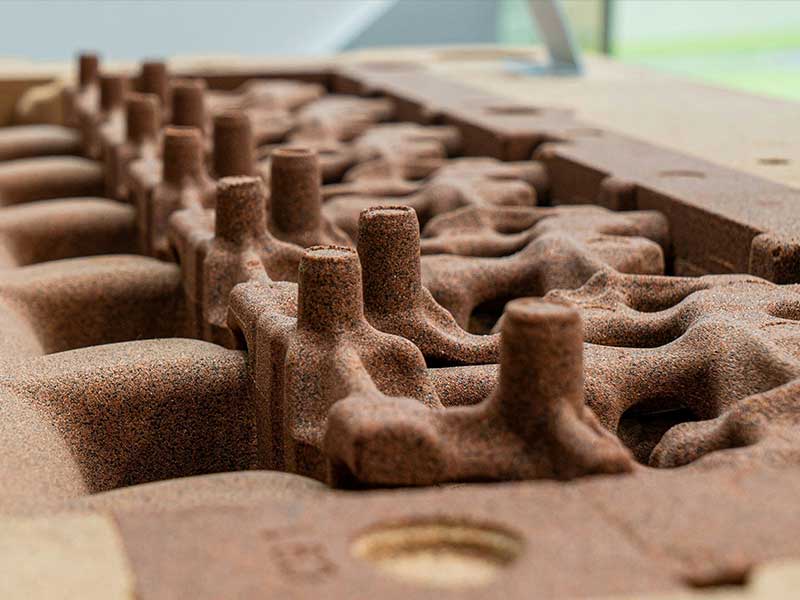
III. Detailed Solutions for Industry-Specific Pain Points
1. Construction Machinery (Replacement Wear Parts for CAT / John Deere: Bucket Teeth, Side Cutters, Quick Couplers)
Pain Points 1: Traditional Forged Bucket Teeth—Inaccurate tooth profiles, large installation gaps leading to easy detachment; high machining costs for wear-resistant steel.
Pain Point 2: High-mix, low-volume production—High costs for forging die development and long lead times for production changeovers.
Investment Casting Solution: Silica sol investment casting ensures precise tooth dimensions, allowing wear-resistant alloy steel components to be formed in a single piece. A single set of wax patterns accommodates multiple material types, enabling rapid prototyping for small batches; OEM replacement parts achieve full interchangeability with original equipment.
2. Automotive Components (Turbocharger Housings, EGR Valve Bodies, Small Transmission Parts)
Pain Point: Exhaust system components suffer from high-temperature corrosion; complex internal flow channels are impossible to machine using conventional methods; high product variety and rapid design iterations lead to long mold development cycles.
Investment Casting Solution: Heat-resistant stainless steel components are cast as a single unit with integrated internal exhaust channels, eliminating the need for deep-hole drilling. 3D-printed wax patterns enable rapid mold creation, reducing the new product prototyping cycle from 60 days to just 15 days.
3. Hydraulics & Valves (Hydraulic Valve Bodies, Pump Housings, High-Pressure Ball Valves)
Pain Point: Complex internal oil passages; sand casting results in high surface roughness, leading to spool jamming and internal leakage; inconsistent dimensions compromise sealing integrity.
Investment Casting Solution: Precision cavity molding creates integrated internal oil passages with smooth, burr-free surfaces. Valve bodies require no internal bore finishing, and high-pressure sealing performance meets all required standards.
4. New Energy & Wind Power (Small Impellers, Cooling Valve Components)
Pain Point: Forging of high-temperature alloy impellers often results in cracking and incurs significant material waste during machining.
Investment Casting Solution: Near-net-shape casting using nickel-based alloys allows the complex curved surfaces of the blades to be formed in a single step, eliminating the substantial machining costs associated with 5-axis CNC operations.
5. Marine & Chemical Equipment (Seawater Pump Housings, Corrosion-Resistant Pipe Fittings)
Pain Point: Standard carbon steel corrodes rapidly in marine environments; forging stainless steel components with complex geometries is technically challenging.
Investment Casting Solution: Components are cast as a single unit using 316L or duplex stainless steel, offering superior resistance to corrosion from seawater, acids, and alkalis. Complex flange structures are formed integrally within the casting process.
IV. Sodium Silicate + Colloidal Silica Dual-Process Combination: Balancing Cost and Precision (Preferred Choice for OEM Export Orders)
1. Colloidal Silica Investment Casting (High Precision: CT4–6, Ra 1.6–3.2): Applications in automotive, medical, hydraulic, and high-end construction machinery sectors; addresses critical pain points regarding precision assembly, corrosion resistance, and high-temperature operating conditions.
2. Sodium Silicate Investment Casting (Economical: CT8–10, Ra 6.3–12.5): Applications for standard wear-resistant bucket teeth and agricultural machinery components; focuses on controlling production costs and resolving the cost-effectiveness challenges associated with lower-end replacement parts.
Common Practice for Export-Oriented Factories: A hybrid approach featuring a colloidal silica surface layer for critical mating surfaces combined with a sodium silicate backing layer, thereby striking an optimal balance between precision requirements and production costs.
V. Summary: Two Core Value Propositions
1. High Precision = Structural Integration + Minimized Machining + High Interchangeability; addresses critical pain points related to high machining costs, poor assembly fit, and inconsistent quality across production batches.
2. Comprehensive Material Versatility = On-Demand Customization of Wear-Resistant, High-Temperature-Resistant, or Corrosion-Resistant Alloys; resolves the inherent difficulties in forming specialized alloys and mitigates issues regarding component failure under demanding operating conditions. This capability serves as the fundamental underlying reason why precision casting is currently the widely preferred manufacturing method for aftermarket replacement parts in construction machinery, as well as for precision automotive components, within the export trade sector.
RELATED NEWS
- Common Casting Defects in Trailer Towing Rings and How to Prevent Them 2026-10-15
- Ductile Iron vs. Carbon Steel Engineering Guide for Heavy-Duty Agricultural Trai 2026-10-13
- Heavy Duty Disc Harrow: How to Choose the Right Model? 2026-10-09
- How to choose the right lawn mower blades? 2026-09-23
- How to Choose Right Industrial Steel Self-Dumping Forklift Hopper? 2026-09-21
CATEGORIES
LATEST NEWS
CONTACT US
Contact: Susanna Sun
Phone: +86 13706842897
E-mail: sue-sunwin@vip.163.com ; sophie091983@gmail.com
Whatsapp:+86 13706842897
Add: 1588 Jiangnan Road Ningbo High-tech Industry zone