Blog
How Modern Foundries Upgrade Subsoiler Points for Extreme Agriculture
The global soil tillage machinery market reached USD 16.42 billion in 2025 and is projected to hit USD 23.11 billion by 2032 at a CAGR of 5.01%, driven by large-scale farm mechanization and rising demand for heavy-duty wear-resistant tillage components.
Among all tillage consumables, subsoiler points (ripper points) stand as the highest-failure terminal part when working in abrasive sandy, compacted clay and rocky soils. Original equipment manufacturers (OEMs), global machinery distributors and large commercial farms face consistent pain points: frequent tip cracking, rapid abrasive thinning, inconsistent batch quality and excessive tractor fuel waste.
Modern professional casting foundries solve these industry bottlenecks via advanced high-chrome alloy metallurgy, precision silica sol investment casting, automated heat treatment and optimized geometric design, turning premium subsoiler points into a core competitive advantage for agricultural machinery supply chains.
1. Market Background: Rising Demand for Extreme-Duty Subsoiler Wear Parts
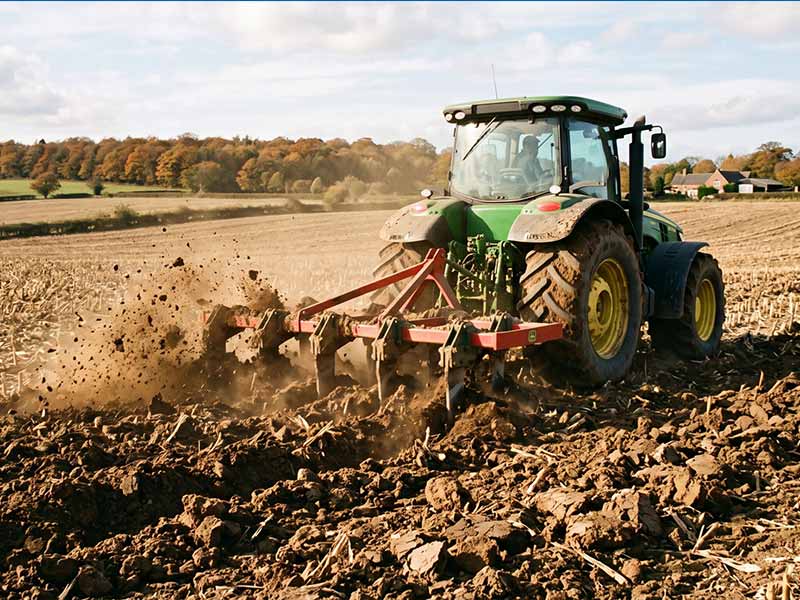
Global agriculture is shifting toward heavier, higher-horsepower tractors and deep tillage operations to break hardpans for better crop root penetration.
Statistics show subsoiling depth has expanded to 25–65 cm across major farming regions, amplifying shock and friction loads on ripper points by over 40% compared with shallow tillage scenarios.
Table 1: Global Tillage Equipment Market & Subsoiler Consumable Growth Data
| Indicator | 2025 Baseline Data | 2026 Estimation | 2032 Forecast | Compound Annual Growth Rate |
| Total global tillage machinery market size | USD 16.42 Billion | USD 17.24 Billion | USD 23.11 Billion | 5.01% |
| High-performance subsoiler point shipment volume | 3.72 Million Units | 4.36 Million Units | 7.15 Million Units | 9.82% |
| Asia-Pacific regional market share | 33.1% | 34.7% | 37.9% | — |
| Average replacement frequency (carbon steel points) | 180 working hours | 172 working hours | 160 working hours | -1.5% annually |
| Average replacement frequency (high-chrome cast points) | 720 working hours | 756 working hours | 820 working hours | +1.9% annually |
Low-grade carbon steel subsoiler points dominate low-price market segments yet create hidden costs for distributors and farmers: frequent replacement halts field operations, raises per-acre labor expenses and damages tractor drivetrains.
Market surveys indicate 68% of global agricultural wholesalers plan to increase procurement of alloy-cast premium subsoiler points before 2027, as superior metallurgy directly translates to higher resale margins and long-term client loyalty.
2. Core Engineering Challenge: Balancing Hardness and Impact Toughness
Producing field-ready subsoiler points requires a precise metallurgical balance: extreme surface hardness resists soil abrasion, while matrix toughness prevents brittle fracture when hitting underground stones.
Traditional plain carbon steel fails this dual standard—hardened carbon steel cracks easily under impact, while soft unhardened steel wears away within days of heavy tillage.
Forward-thinking foundries abandon basic car
bon steel and adopt customized high-chrome alloy casting, with scientifically calibrated ratios of chromium, manganese and boron to form dense wear-resistant carbide microstructures inside components.
Silica sol investment casting replaces sand casting to eliminate surface pores, shrinkage cavities and dimensional deviation, achieving tolerance control within ±0.2 mm. This precision enables seamless OEM assembly and fast field replacement without modification.
Table 2: Performance Comparison of Conventional vs Upgraded Subsoiler Point Materials
| Performance Metric | Low-Carbon Steel Subsoiler Points | High-Chrome Alloy Cast Subsoiler Points | Field Benefit Gap |
| Surface Hardness (HRC) | 32–38 | 58–64 | 70% stronger abrasion resistance |
| Impact Toughness (J/cm²) | 14–18 | 26–32 | 110% higher anti-cracking capacity on rocky soil |
| Standard Service Life (Continuous Tillage) | 160–200 working hours | 700–800 working hours | 3.8x longer replacement cycle |
| Dimensional Consistency Tolerance | ±1.0 mm | ±0.2 mm | No manual trimming during OEM installation |
| Average Fuel Consumption Increase | Baseline +12–15% | Baseline +2–4% | 10% lower tractor diesel cost per hectare |
Field verification data collected from commercial farms in North America, Europe and Australia, 2024–2025
3. Rigorous Automated Manufacturing & Global Standard Compliance
Global agricultural machinery supply chains demand traceable, certified production to cross regional trade barriers. Top-tier modern foundries align all casting, heat treatment and inspection workflows with international industrial standards: Machinery Directive 2006/42/EC, AS4772 agricultural wear part specifications and ISO13031 tillage equipment safety norms, eliminating customs delays and liability risks for distributors.
The most critical upgrade lies in fully automated quenching and tempering heat treatment lines. Small-scale foundries rely on manual furnace operation, leading to uneven hardness across single batches—some points wear fast while others crack instantly. Automated closed-loop heat treatment delivers uniform metallurgical properties for every piece of subsoiler point, removing inconsistent quality as a major customer complaint.
Standardized quality control procedures include raw alloy spectral analysis, post-casting hardness testing, ultrasonic flaw detection and dimensional scanning, with all test reports archived for OEM and wholesale client audit. 2025 industry sampling data shows foundries adopting full automation reach a 98.1% product qualification rate, versus only 76.4% for manual workshop manufacturers.
4. Geometric Optimization to Maximize Farm ROI
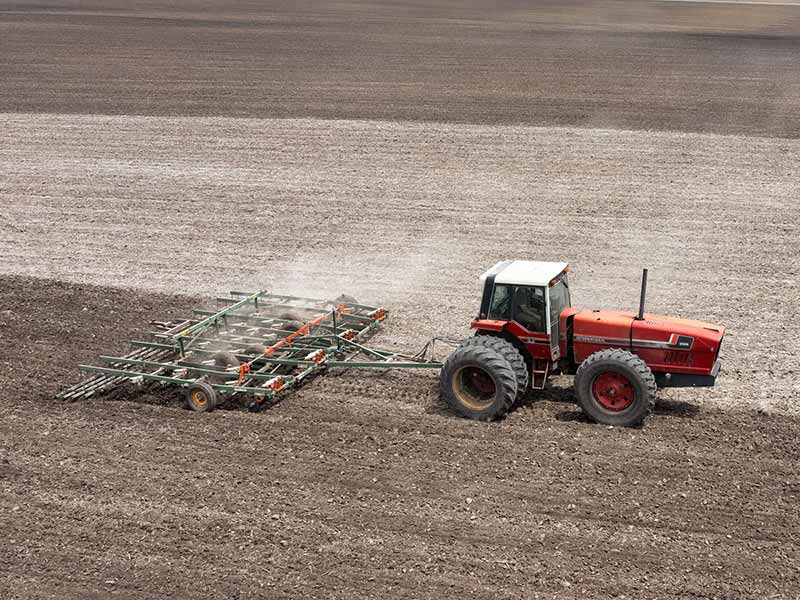
Material upgrades alone cannot unlock full operational efficiency; modern foundries integrate fluid-soil simulation to redesign subsoiler point penetration angles and streamlined profiles.
Precision-cast tapered cutting edges reduce draft resistance when breaking compacted hardpan, delivering two key economic benefits for end farmers:
1. Reduced drivetrain strain on tractors, cutting maintenance costs for engines, transmissions and hydraulic systems;
2. Noticeable diesel fuel savings during long-hour deep tillage operations.
Field tests confirm optimized high-chrome subsoiler points lower tractor fuel use by roughly 9–11% per hectare compared with outdated carbon steel designs. For large commercial farms operating 1,000+ tillage hours annually, the fuel savings offset the higher upfront cost of premium alloy points within 2–3 planting seasons.
For global distributors and OEM partners, custom high-chrome casting foundries provide flexible geometry customization to match regional soil characteristics: narrow sharp tips for sandy Australian farmland, wide reinforced profiles for heavy clay in Eastern Europe, and ultra-thick anti-shock versions for rocky Midwest U.S. terrain. Strictly certified, precision-engineered wear parts become a selling point to capture high-value farm clients and stabilize long-term repeat orders.
5. Industry Outlook: Alloy Cast Subsoiler Points Define Future Market Competition
As global demand for high-efficiency sustainable tillage accelerates, low-cost carbon steel subsoiler points will gradually lose market share to high-chrome investment cast alternatives. Market projections show high-alloy wear parts will occupy 42% of the subsoiler consumable market by 2030, up from 18% in 2025.
For agricultural machinery OEMs and cross-border wholesalers, strategic cooperation with advanced casting foundries delivers dual competitive edges:
1. Differentiated product portfolios with longer service life to beat generic low-price competitors;
2. Full international certification support for smooth cross-continental supply chain distribution.
Modern foundries’ comprehensive upgrades—from alloy metallurgy and precision casting to automated heat treatment and simulation-driven geometric design—solve the core pain point of extreme agricultural tillage: balancing durability, operational cost and consistent quality. In an increasingly saturated agricultural machinery market, upgraded subsoiler points manufactured via modern casting technology are no longer a premium option, but a mandatory standard to secure market dominance.
RELATED NEWS
- How to choose the right lawn mower blades? 2026-09-23
- How to Choose Right Industrial Steel Self-Dumping Forklift Hopper? 2026-09-21
- Disc Plow vs Disc Harrow for Primary & Secondary Tillage 2026-09-18
- What Factors Affect Plough Share Service Life? 2026-09-15
- 2026 Bucket Teeth Selection Guide for Soil Rock and Mining 2026-09-11
CATEGORIES
LATEST NEWS
CONTACT US
Contact: Susanna Sun
Phone: +86 13706842897
E-mail: sue-sunwin@vip.163.com ; sophie091983@gmail.com
Whatsapp:+86 13706842897
Add: 1588 Jiangnan Road Ningbo High-tech Industry zone