Blog
Excavator Bucket Side Cutters Purchasing Guide for GET Wear‑Resistant Side Edges
1. Introduction
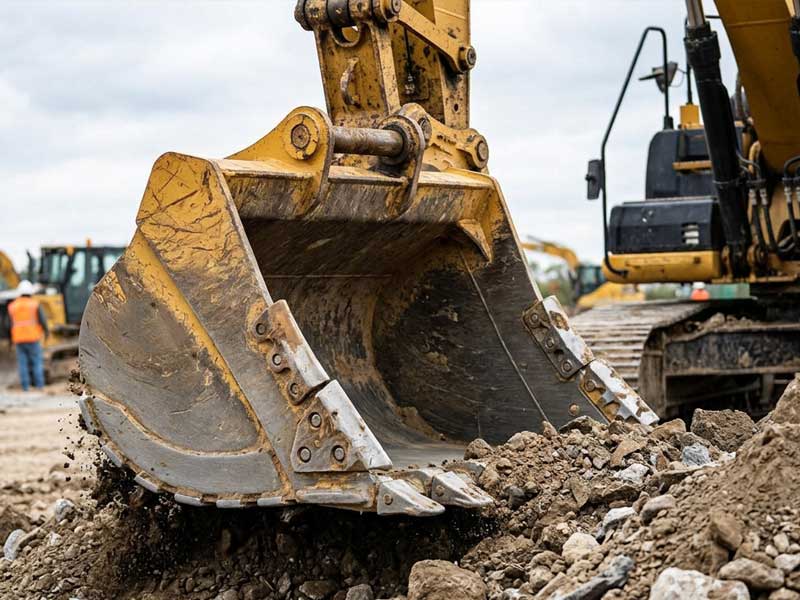
Excavator bucket side cutters, also known as bucket side teeth or side edges, are critical ground‑engaging tool (GET) wear components fitted to both lateral edges of excavator buckets. During excavation, bucket side plates sustain continuous abrasive friction and cutting resistance against soil, gravel, frozen ground and rock.
Well‑engineered side cutters perform dual core functions: slicing rock and soil to widen digging coverage, while shielding the bucket base side wall from premature wear and mechanical damage, effectively extending overall bucket service life.
According to independent industry market research, the global bucket side cutter market is projected to expand at a 5.85 % CAGR between 2025‑2032, reaching USD 286.8 million by 2032, driven by rising global infrastructure investment and growing demand for long‑life heavy‑duty GET replacement parts.
Overseas distributors, fleet operators and procurement managers increasingly prioritize material consistency, heat‑treatment stability, interchangeable OEM fitment and flexible OEM/ODM casting services when sourcing bucket side cutters.
Many buyers encounter frequent pain points: inconsistent hardness causing early cracking or rapid wear, poor dimensional tolerance leading to bad bucket‑to‑cutter fitting, suppliers unable to support small‑batch custom reverse‑engineering, and unclear quality inspection standards for cast GET parts. This article covers core manufacturing specifications, type comparison, application‑matching guidance, procurement checklists and frequently asked questions for international B2B buyers.
2. Core Manufacturing Technology & Performance Advantages
Premium bucket side cutters require strict control over alloy formulation and heat‑treatment workflows for heavy‑duty working conditions.
Table 1: Material & Heat‑Treatment Performance Benchmark for Bucket Side Cutters
| Parameter | Premium Low‑Carbon Martensitic Alloy Casting | Standard Manganese Steel | General‑Purpose Cast Steel |
| Surface Hardness | HRC 46‑52 | HRC 38‑44 | HRC 28‑36 |
| Core Toughness | Excellent, anti‑fracture | Moderate | Low, risk of brittle breakage |
| Low, risk of brittle breakage | Balanced wear‑resistance & impact resistance | Low procurement cost | Very low unit cost |
| Typical Working Scenario | Mining, quarry, rock excavation | General earth‑moving, soil digging | Light‑duty landscaping |
| Expected Service‑Life Multiplier | 1.8‑2.2 × vs general‑purpose steel | 1.2‑1.4 × vs general‑purpose steel | Baseline reference |
High‑strength wear‑resistant alloy steel: Precision‑cast from selected low‑carbon martensitic alloy steel. Delivers high surface hardness while retaining robust internal toughness to resist crack propagation under heavy impact loads.
Controlled quenching & tempering heat‑treatment: Strict quenching plus tempering cycles stabilise hardness distribution across the whole component, avoiding hard‑brittle edges and soft core defects. The target HRC 46‑52 hardness band strikes the optimal trade‑off between wear resistance and impact‑load tolerance.
Precision casting & tight tolerance control: Advanced casting processes minimise deviation on mounting holes and mating contact surfaces. Good fitting ensures uniform stress distribution after installation, preventing local stress concentration and premature failure.
Two mainstream mounting configurations: Bolt‑on side cutters and weld‑on side cutters. Bolt‑on variants allow fast part replacement without welding work, ideal for high‑abrasion sites requiring frequent wear‑part turnover. Weld‑on side cutters deliver rigid integrated structural performance for extreme heavy‑duty mining buckets.
Table 2: Bolt‑on vs Weld‑on Bucket Side Cutters Application Comparison
| Item | Bolt‑on Bucket Side Cutters | Weld‑on Bucket Side Cutters |
| Installation Method | Bolt & nut mechanical fastening | Direct welding onto bucket side plate |
| Replacement Efficiency | Fast on‑site swap, no welding equipment needed | Re‑welding required for replacement, higher labour cost |
| Structural Rigidity | Good; check bolt torque regularly | Excellent rigid connection |
| Recommended Working Conditions | High‑wear earth‑moving, trenching, frequent‑change cycles | Quarry, mining, ultra‑heavy rock impact |
| Compatibility Note | Require pre‑drilled bucket mounting holes | Fits most bucket side‑plate geometries |
3. Primary Application Scenarios
Bucket side cutters serve diverse earth‑moving and mineral‑extraction projects for mini excavators up to large mining‑class digging machines.
Table 3: Application Scenario Matching Guide for Bucket Side Cutters
| Working Site | Main Working Media | Recommended Side‑Cutter Type | Key Performance Requirement |
| Mines & Quarries | Hard rock, ore, granite debris | Weld‑on / heavy‑duty bolt‑on | High impact toughness + superior abrasion resistance |
| Heavy‑construction Foundation Excavation | Hard clay, frozen soil, construction debris | Bolt‑on heavy‑duty alloy cast | Balanced cutting performance & anti‑breakage |
| Trenching & Utility Excavation | Mixed soil, gravel, compacted ground | Standard bolt‑on side edges | Clean side‑wall cutting, reduce machine fuel consumption |
| General Civil Earth‑moving | Loose soil, sand, gravel | Economy‑grade bolt‑on | Cost‑effective wear protection |
Mines & Quarries: Endure intensive cutting and abrasive friction against high‑hardness rock and mineral ore. Sub‑standard side cutters will fail rapidly and bring costly unplanned downtime.
Heavy‑duty building foundation digging: Handles compact hard soil, frozen ground and mixed construction waste, maintaining stable penetration performance.
Trench‑digging projects: Produces neat trench sidewalls, lowers digging resistance and helps cut down excavator fuel expenditure.
4. OEM / ODM Custom Casting & Global Supply Solutions
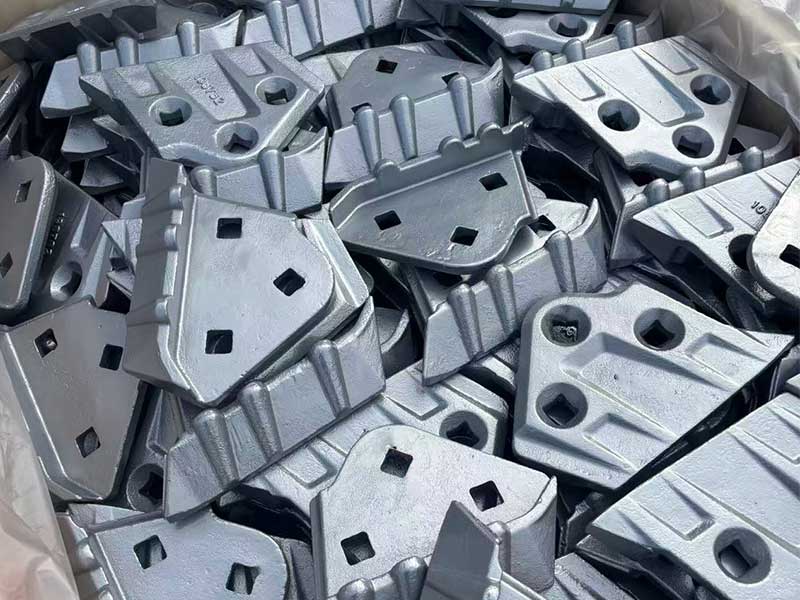
Lihuacasting delivers flexible GET‑part supply solutions matching mainstream excavator brands including Caterpillar, Komatsu, Doosan, Volvo and various non‑standard custom buckets.
Full‑model‑range compatibility: Supply complete side‑cutter series plus matching bolt‑and‑nut hardware covering compact mini‑excavators all the way up to large‑scale mining excavators.
Small‑batch custom casting support: Accept custom mould development from customer‑provided engineering drawings or physical sample parts. Suitable for multi‑SKU, low‑volume procurement requirements. Reverse‑engineering service is available if customers only supply worn original samples.
Working‑condition‑oriented material customisation: Adjust alloy element ratios for ultra‑high‑abrasion or extreme‑impact operating environments to deliver application‑tailored wear‑part solutions.
Quality inspection compliance: Perform Brinell / Rockwell hardness testing, visual defect inspection and dimensional verification. Third‑party NDT non‑destructive testing reports can be supplied upon buyer request for batch shipments.
5. Key Sourcing Checklist for Overseas B2B Buyers
International procurement managers should verify these critical points before confirming bucket side‑cutter orders:
Hardness range confirmation: Confirm actual HRC hardness window, avoid suppliers quoting surface‑only hardness without guaranteed core toughness.
Dimensional tolerance & fitting: Request critical dimension drawings; bad fit will cause bolt loosening, abnormal stress and early‑part failure.
MOQ & custom lead‑time: Clarify minimum‑order quantity, mould‑opening cycle and production lead‑time for OEM / ODM orders.
Quality documentation: Ask for material test reports (MTR), hardness‑test records, casting defect inspection records. Third‑party inspection options reduce offshore‑sourcing risk.
Mounting‑hardware matching: Confirm whether matching bolts and nuts are included with bolt‑on side‑cutters.
6. FAQ for Bucket Side Cutters
Q1: Should I choose bolt‑on or weld‑on bucket side cutters?
A: Select bolt‑on side edges if you want quick field replacement and your bucket already has pre‑drilled mounting holes. Pick weld‑on side cutters for mining‑grade heavy rock impact scenarios where maximum structural rigidity is prioritised over replacement convenience.
Q2: How long do excavator bucket side cutters last?
A: Service life heavily depends on working material, operating intensity and material grade. Premium alloy‑cast side cutters deliver 1.8‑2.2 times longer service‑life than ordinary cast steel under identical mine‑site conditions (see Table 1).
Q3: Can you manufacture side cutters by reverse‑engineering from my worn sample parts?
A: Yes. We support reverse‑engineering from physical samples, though extra lead‑time for scanning and mould‑making is required. Engineering validation will be completed before mass‑production.
Q4: What quality reports can you provide for bulk orders?
A: Material test reports, hardness test records and dimensional inspection reports are standard deliverables. NDT non‑destructive test reports can be arranged upon request.
7. Conclusion
Bucket side cutters are relatively small but high‑impact GET Wear Parts that protect expensive excavator buckets, improve digging efficiency and lower overall fleet maintenance expenditure. For global buyers, evaluating alloy‑steel formulation, heat‑treatment quality, dimensional accuracy and supplier custom‑casting capacity is far more important than simply comparing unit prices.
Lihuacasting supplies bolt‑on and weld‑on excavator bucket side cutters, supporting standard replacement orders and drawing‑ / sample‑based OEM & ODM custom casting for worldwide industrial clients. Conatct US for More Info
RELATED NEWS
- How to Overcome Tool Wear Challenges When Machining High-Hardness Iron Castings? 2026-10-23
- Low-Temperature Charpy Impact Testing for Off-Road Trailer Castings 2026-10-20
- Common Casting Defects in Trailer Towing Rings and How to Prevent Them 2026-10-15
- Ductile Iron vs. Carbon Steel Engineering Guide for Heavy-Duty Agricultural Trai 2026-10-13
- Heavy Duty Disc Harrow: How to Choose the Right Model? 2026-10-09
CATEGORIES
LATEST NEWS
CONTACT US
Contact: Susanna Sun
Phone: +86 13706842897
E-mail: sue-sunwin@vip.163.com ; sophie091983@gmail.com
Whatsapp:+86 13706842897
Add: 1588 Jiangnan Road Ningbo High-tech Industry zone