Blog
Custom Torque Rod Bracket for Trailer Suspension Sourcing Guide for North American & European Buyers
Market opportunity: Global trailer suspension systems market projected to reach US$4.7 billion by 2032, with the U.S. trailer component market alone expected to grow from $4.6 billion (2025) to $8.55 billion by 2034 at a 7.0% CAGR .
China’s trailer suspension systems market is forecast to grow at an 8.7% CAGR through 2032, reflecting the country's expanding manufacturing capacity for export-grade components .
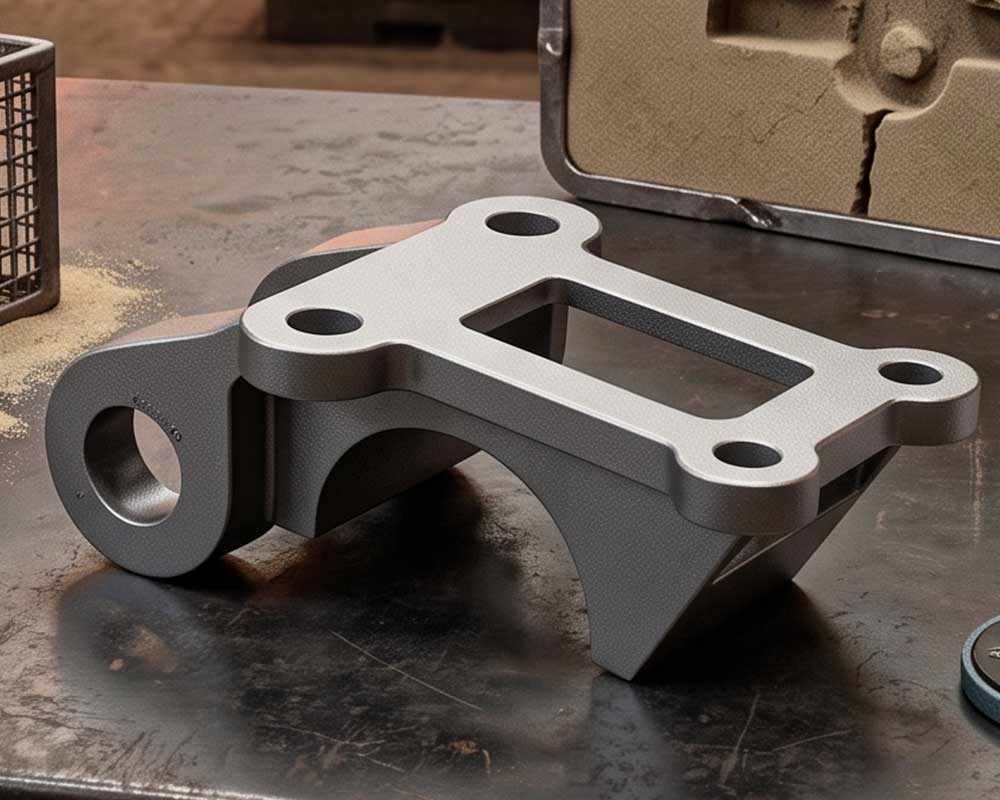
This guide provides actionable insights for sourcing custom torque rod brackets—critical suspension components—from Chinese foundries, with data-driven recommendations for quality, cost, and supply chain resilience.
(Source: marketresearch)
1. Market Landscape & Growth Drivers
1.1 Global Trailer Suspension Market at a Glance
| Metric | Value |
| Global market size (2025) | US$3.4 billion |
| Projected market size (2032) | US$4.7 billion |
| Global CAGR (2025–2032) | 4.7% |
| U.S. market size (2025) | US$1.1 billion |
| China market CAGR (2025–2032) | 8.7% |
(Source: Market research data)
1.2 Why Torque Rod Brackets Matter
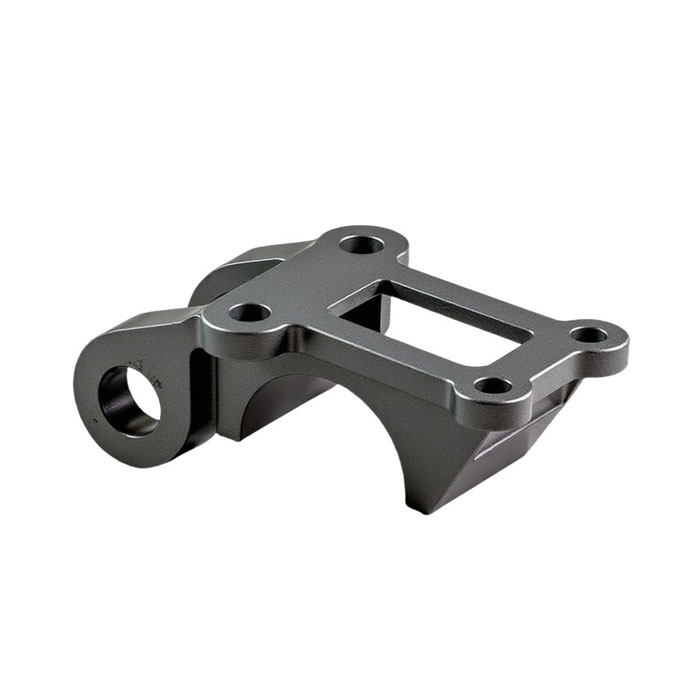
Torque rod brackets (also called torque arms or radius rod brackets) are critical components in mechanical suspension systems. They:
Maintain axle alignment and control lateral movement
Absorb braking and acceleration forces
Reduce wear on leaf springs and other suspension components
Extend trailer service life and reduce maintenance downtime
1.3 Key Market Trends Affecting Sourcing Decisions
Shift Toward Air Suspension: Air suspension systems are growing at 5.4% CAGR and are projected to reach US$3.4 billion by 2032, driven by superior ride quality, load equalization, and regulatory compliance . However, mechanical suspension systems remain dominant in heavy-duty applications like construction, logging, and off-road agriculture, where simplicity and durability are paramount.
Smart Suspension Integration: IoT sensors, load monitoring, and predictive maintenance capabilities are increasingly integrated into suspension systems . This trend affects bracket design—components must now accommodate sensor mounting points and diagnostic interfaces.
Lightweighting & Material Innovation: OEMs are adopting lightweight composite materials and corrosion-resistant coatings to improve fuel efficiency and comply with emission standards . Torque rod brackets made from high-strength ductile iron or cast steel offer the strength-to-weight ratio required for modern trailer designs.
Electrification Impact: Electric and hybrid trailers require redesigned suspension geometries to handle torque variations and regenerative braking inputs—creating demand for custom-engineered brackets .
2. Types of Torque Rod Brackets for Trailers
Understanding the product categories helps buyers specify requirements accurately:
2.1 By Suspension Type
| Bracket Type | Application | Typical Material | Key Characteristics |
| Leaf Spring Torque Rod Bracket | Mechanical suspension systems | Ductile iron (QT400-18, QT500-7) | High impact resistance, cost-effective for standard loads |
| Air Suspension Torque Rod Bracket | Air ride trailers | Cast steel or ductile iron | Higher precision required, lighter design |
| Torsion Axle Bracket | Torsion axle suspension | Cast steel | Greater angular compliance, smoother ride |
2.2 By Capacity Class
| Capacity Range | Typical Application | Market Segment |
| Below 8,000 lbs | Light-duty utility trailers | Aftermarket, retail |
| 8,000–15,000 lbs | Medium-duty flatbed trailers | OEM, fleet |
| Above 15,000 lbs | Heavy-duty construction trailers | OEM, heavy equipment |
2.3 By Customization Level
| Customization Type | Description | Suitable for |
| OEM Specifications | Manufactured to buyer-provided drawings and standards | Brand owners, OEM suppliers |
| Aftermarket Replacement | Standard dimensions matching popular trailer models (e.g., BPW, SAF-Holland, Hendrickson) | Distributors, retailers |
| Full Custom Design | Engineered from scratch based on application requirements | Specialty trailer manufacturers |
3. Manufacturing Processes & Capabilities
Choosing the right casting process directly impacts quality, cost, and lead time.
3.1 Process Comparison
| Process | Sand Casting | Investment Casting (Lost Wax) | Lost Foam Casting | Die Casting |
| Precision | Medium | High (≤±0.1mm) | High | Very High |
| Surface Finish | Rough | Smooth | Smooth | Excellent |
| Complexity | Simple shapes | Complex geometries | Complex with undercuts | Simple to moderate |
| MOQ | Low | High | Medium | Very High |
| Cost | Low | High | Medium | Medium (per unit) |
| Best For | Heavy brackets, prototypes | Precision brackets, thin walls | High-volume complex shapes | High-volume, lightweight designs |
3.2 Key Material Options
| Material | Grade | Tensile Strength | Applications |
| Ductile Iron | QT400-18, QT500-7, QT600-3 | 400–600 MPa | Most trailer brackets—excellent impact resistance |
| Cast Steel | ZG230-450, ZG310-570 | 450–570 MPa | Heavy-duty, high-stress applications |
| Gray Iron | HT250, HT300 | 250–300 MPa | Light to medium duty (cost-optimized) |
| Alloy Steel | Custom compositions | 600+ MPa | Extreme-duty, mining applications |
3.3 Value-Added Services to Look For
Leading Chinese foundries offer integrated services that reduce supply chain complexity:
Mechanical finishing: CNC machining, turning, milling (tolerances to ±0.1mm)
Surface treatment: Painting, powder coating, phosphating, galvanizing, anti-rust oil
Heat treatment: Normalizing, annealing, quenching + tempering
In-house testing: Dimensional inspection, salt spray testing, air tightness testing, dynamic balancing
4. Buyer Pain Points & Mitigation Strategies
Based on real-world failure analysis and industry experience, here are the critical pitfalls when sourcing cast torque rod brackets from China:
Pain Point 1: Inconsistent Material Properties
The Problem:
Casting test bars (individually poured samples) often show excellent mechanical properties, but actual component strength can be significantly lower due to:
Internal porosity and shrinkage defects
Cold shuts (cold lap defects) from improper mold filling
Air entrapment during high-pressure die casting
Real-World Case:
In one documented failure analysis, ADC3 aluminum alloy torque rods showed test bar yield strength of 199–205 MPa (meeting design requirements), but actual component yield strength measured only 131–141 MPa—far below the 163 MPa design requirement. The root cause: casting defects and process variability that test bars do not capture .
Mitigation:
Require destructive testing on production parts, not just test bars
Specify radiographic (X-ray) or ultrasonic inspection for critical areas
Demand process capability data (Cpk) from the foundry
Audit the foundry's quality management system—ISO9001 and IATF16949 certifications are essential
Pain Point 2: Surface Finish & Corrosion Issues
The Problem:
Brackets used in harsh environments (road salt, moisture, gravel) require robust corrosion protection. Paint failures often occur due to poor surface preparation or inadequate coating thickness.
Mitigation:
Specify coating type and thickness (e.g., powder coating ≥80μm, zinc plating ≥8μm)
Request salt spray test reports (ASTM B117) for your specific coating
Consider galvanizing for maximum corrosion resistance in extreme applications
Pain Point 3: Dimensional Inconsistency
The Problem:
Casting shrinkage and pattern wear can cause dimensional drift between batches, affecting bolt alignment and installation.
Mitigation:
Require first-article inspection (FAI) for every new batch
Specify critical dimensions with allowable tolerances clearly marked on drawings
Request CMM (coordinate measuring machine) inspection reports
Maintain a sample library—retain approved master parts for comparison
Pain Point 4: Lead Time & Logistics Uncertainty
The Problem:
Mold making (3–6 weeks), production (2–4 weeks), and sea freight (4–6 weeks) combine for 3–4 month lead times. Disruptions are common.
Mitigation:
Place blanket orders with scheduled releases to secure foundry capacity
Negotiate safety stock agreements—foundry holds 10–20% of annual volume for emergency releases
Diversify suppliers—qualify at least two foundries as backup
Build lead time into demand planning—order 6 months before peak seasons
Pain Point 5: Communication & Technical Specification Gaps
The Problem:
Drawing interpretation differences, material standard mismatches (GB vs. ASTM vs. EN), and unclear quality requirements lead to non-conforming parts.
Mitigation:
Provide 2D and 3D drawings (CAD, STEP, PDF, IGS formats)
Specify material standards explicitly (e.g., "ASTM A536 Grade 65-45-12," not just "ductile iron")
Use clear visual standards—provide samples or reference photos for surface finish and coating appearance
Engage a local sourcing agent or quality inspector to bridge language and cultural gaps
5. Recommended Sourcing Strategy & Supplier Evaluation
5.1 Supplier Selection Criteria
| Criteria | Weight | Checkpoints |
| Technical Capability | 25% | Process range, precision capability, engineering support, simulation tools |
| Quality System | 25% | ISO9001/IATF16949 certification, testing equipment, inspection protocols |
| Production Capacity | 20% | Annual output, mold making capability, lead time, scalability |
| Export Experience | 15% | Familiarity with ASTM, EN, JIS standards; experience with US/EU buyers |
| Financial Stability | 10% | Operating history, credit rating, investment in equipment |
| Logistics & Communication | 5% | English proficiency, responsiveness, shipping options |
5.2 Due Diligence Checklist
Before placing an order, verify:
Factory audit: Visit the facility or use third-party audit services (e.g., SGS, Bureau Veritas)
Material certifications: Request mill test certificates for raw materials
Process capability: Review Cpk data for critical dimensions
References: Contact existing customers (ask for US/EU buyers specifically)
Sample approval: Require production-quality samples before mass production
Inspection plan: Agree on AQL (Acceptable Quality Level) standards for batch release
5.3 Cost Breakdown Estimate
| Cost Component | % of FOB Price | Notes |
| Raw materials | 30–40% | Steel/iron prices are volatile—consider price protection clauses |
| Casting & processing | 25–35% | Depends on process complexity and volume |
| Surface treatment | 5–10% | Powder coating vs. galvanizing affects cost significantly |
| Packaging & logistics | 10–15% | FOB vs. CIF pricing, container consolidation options |
| Tooling amortization | 3–8% | Spread over initial order volume—negotiate tooling ownership |
| Foundry margin | 8–12% | Competitive market—get quotes from 3–5 suppliers |
6. Conclusion & Actionable Recommendations
For Wholesalers & Distributors:
Build a standardized product catalog covering the most common trailer bracket types
Maintain safety stock of high-turnover SKUs (8,000–15,000 lb capacity range)
Dual-source from at least two qualified foundries to ensure supply continuity
Invest in quality inspection—in-house or third-party—to catch defects at the foundry, not at your warehouse
For OEMs & Large Fleet Buyers:
Collaborate on design—share application data (load cycles, stress points) to optimize bracket geometry
Secure long-term capacity agreements—book foundry capacity 12+ months in advance
Implement joint quality improvement programs—share failure data to drive continuous improvement
Consider vertical integration—some foundries offer finishing, assembly, and kitting services
Lihuacasting is a specialized foundry focused on agricultural and construction machinery components, with expertise in sand casting, investment casting, and lost foam casting for torque rod brackets, suspension components, and chassis parts. For inquiries or to discuss your custom casting requirements, contact our sales team.
RELATED NEWS
- How to choose the right lawn mower blades? 2026-09-23
- How to Choose Right Industrial Steel Self-Dumping Forklift Hopper? 2026-09-21
- Disc Plow vs Disc Harrow for Primary & Secondary Tillage 2026-09-18
- What Factors Affect Plough Share Service Life? 2026-09-15
- 2026 Bucket Teeth Selection Guide for Soil Rock and Mining 2026-09-11
CATEGORIES
LATEST NEWS
CONTACT US
Contact: Susanna Sun
Phone: +86 13706842897
E-mail: sue-sunwin@vip.163.com ; sophie091983@gmail.com
Whatsapp:+86 13706842897
Add: 1588 Jiangnan Road Ningbo High-tech Industry zone